
Morocco Family Road Trip: Marrakech, Desert, Fes, and Rabat — Our One-Week Itinerary
📋 Practical Information
There are some trips you don't really plan — you choose a destination, book accommodation, and the rest unfolds on the road.
Morocco was a bit like that. Not a longtime idea, but a desire that came about naturally: to go with my mother and sister, somewhere completely different from what we know, somewhere where everything appeals to all the senses at once.
Two generations, one rental car, eight days. My mother discovering Africa for the first time. My sister and I somewhere between guides and travel companions. And a country that welcomed us with its colors, its smells, its contrasts, and a hospitality we never expected to experience so intensely.
This isn't a family trip in the classic sense of the term — no kids, no strollers, no minute-by-minute itinerary. It's something rarer and more precious: time with adults, with your mother, with your sister, in a place that completely takes you out of your everyday Quebecois life.
We crossed Marrakech and its enchanting medinas, slept under the stars in the Merzouga desert, traversed the labyrinthine alleys of Fes, and followed the Atlantic coast to Casablanca. Eight days, four major stops, breathtaking mountain roads in the Dades — and memories we'll carry for a long time.
In this guide, we tell you everything: our day-by-day itinerary, what we truly loved, what we would have done differently, and all the practical details for organizing your own road trip in Morocco.
Our Morocco Road Trip Itinerary: 8 Days Day by Day
We took a large loop starting from Casablanca, heading south to the desert, then back up towards Fes before returning to the coast. It's geographically logical, avoiding unnecessary back-and-forth travel, and it allows you to see the country's landscape change completely from one stage to the next.
- Day 1: Arrival in Casablanca, car pickup, drive to Marrakech — medina, Jemaa el-Fna, tanneries
- Day 2: Route to Dadès — stop in Ouarzazate (Atlas Film Studios), overnight at the riad
- Day 3: Route to Merzouga — stop at Todra Gorges, bivouac under the stars, Berber campfire
- Day 4: Return to the Riad — SUV Safari, Oasis Tour, Dune Buggy Riding
- Day 5: Drive to Fes (~7h) — recovery day
- Day 6: Guided tour of Fes — medina, tanneries, artisans
- Day 7: Volubilis, Rabat, return to Casablanca and
- Day 8 Return flight
💡 Car rental tip: Book with an established company and check the vehicle's condition upon pickup – fuel tank, air conditioning, warning lights – before signing anything. Small, independent rental companies can deliver unexpected surprises at 8 a.m. after an overnight flight.
The stages of our road trip in Morocco
Casablanca — Immediate arrival and departure
Casablanca, for us, was about arriving and picking up the car. We landed in the morning, got the vehicle—under circumstances we'll discuss in the Marrakech section—and headed straight south.
We had the chance to see a bit more of Casablanca on the way back, or at least we hoped to. But Morocco had other plans for our last day. If you have time, the Hassan II Mosque is said to be unmissable. We, on the other hand, ended up washing the rental car before returning it.
Where to sleep if you have a layover: A hotel 5-10 minutes from Mohammed V Airport is the most convenient solution if you're leaving early the next morning.
Marrakesh — trial by fire (literally)
What happened even before arriving
We start at the beginning: picking up the car at Casablanca airport.
The rental company clearly indicated they had a counter at the airport. After 20 minutes of circling around without finding it, we realized they simply deliver the cars on-site – no physical office. We called them. He arrived 30 minutes late.
The car? Delivered with the tank on. E and a light Check Engine on. The cruise control doesn't work. The ’upgrade« he proudly announces. And to top it all off, when leaving the airport parking lot with the vehicle, we have to pay the parking fees—which the rental company should have paid themselves. I argue with the attendant. I lose. We leave a little frustrated, but the drive to Marrakech is beautiful and the scenery is already starting to change.
Arriving in town on a Saturday at noon, it was total chaos. The GPS directed me into a medina alley that got narrower with every meter. At one point, my car wouldn't fit anymore. Dozens of people improvised as guides, helping me back up.
I’m giving the name of our riad to a man on the spot. He tells me it’s a few steps away, offers to take care of parking — he moves a taxi and two mules so we can park — and puts our luggage on a cart before we can say no. «Follow me, it’s not far.» It was more than 500 meters away. He asks us for 150 dirhams upon arrival. We are exhausted, our brains aren’t calculating anymore. We pay.
The medina, the tanneries, and the day's lessons
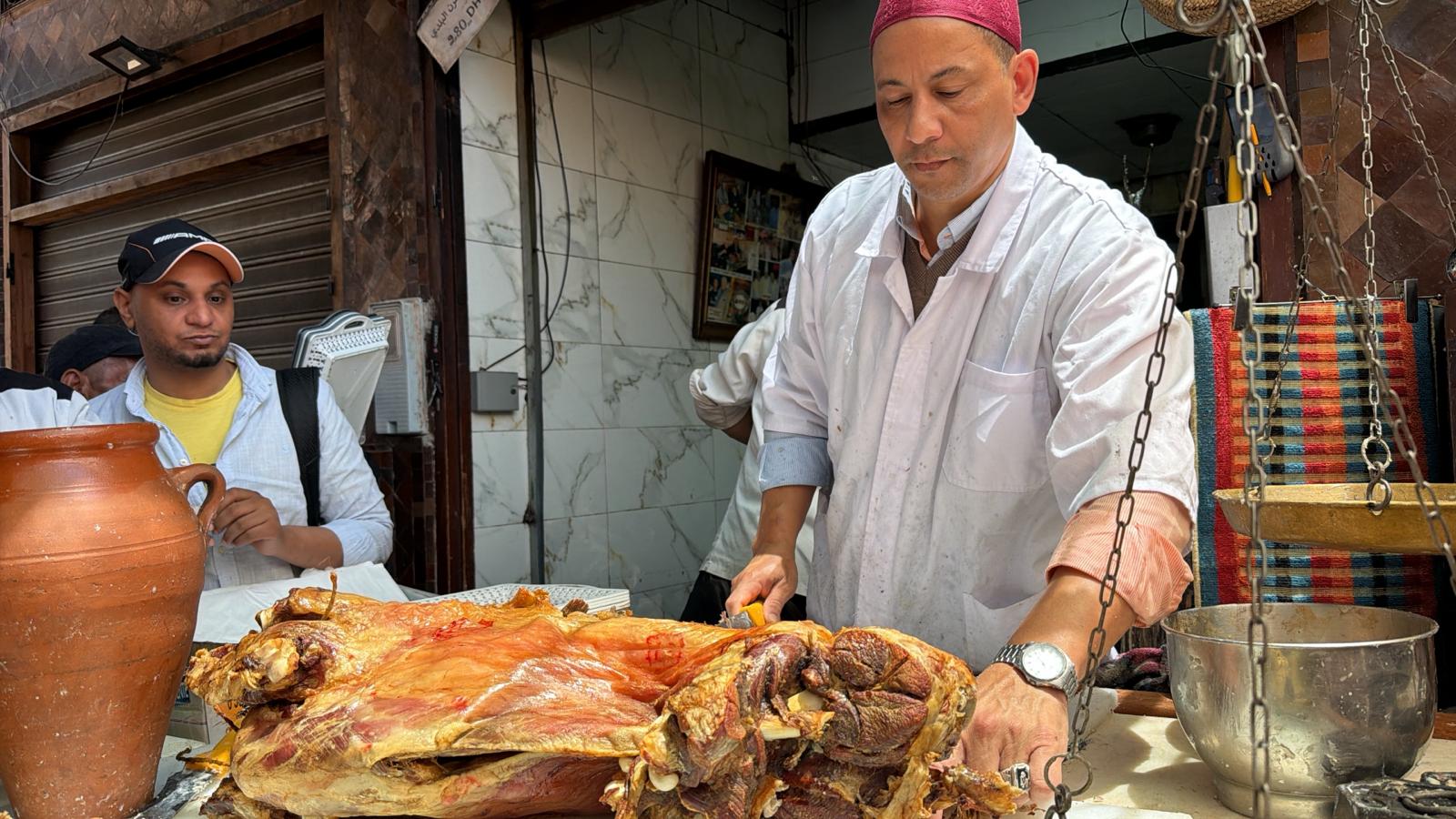
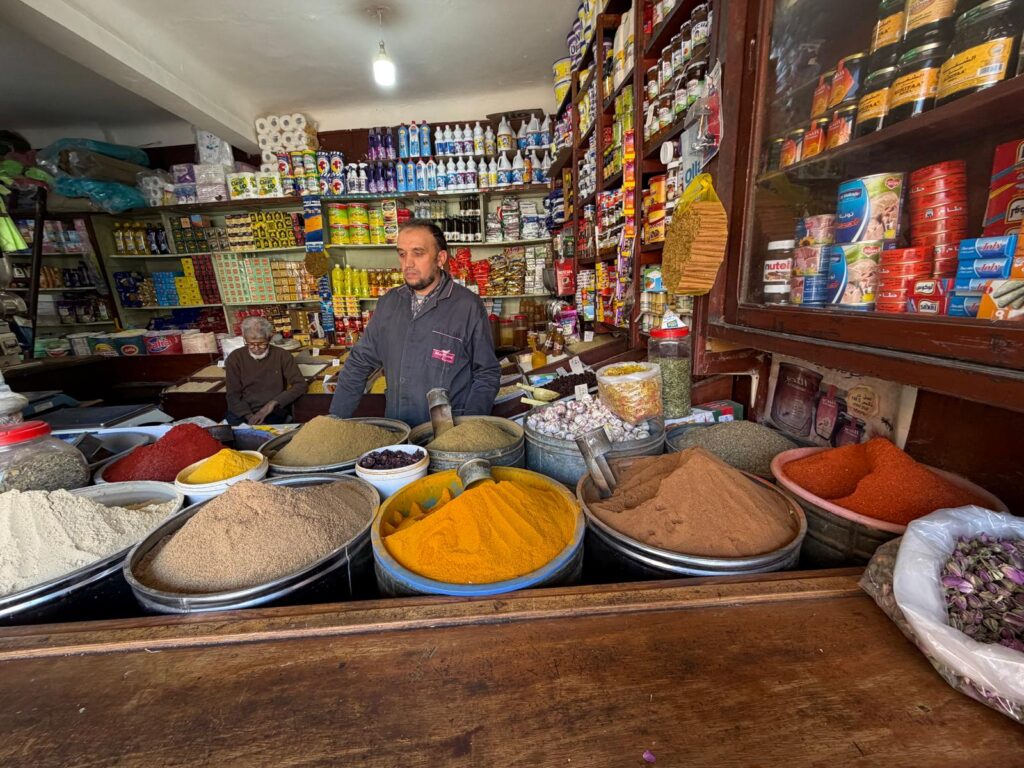
After dropping off our luggage, we headed out to explore again. My sister really wanted to eat at Amin's — whole lamb cooked underground, it's an institution. We quickly got lost in the alleyways and stumbled upon it by chance. There was one table left. The meal was excellent — tasty, generous, authentic.
Continuing on, a man tells us to go see the tanneries: the artisans are there for the last day before the Sheep Festival. We follow his directions. At every wrong turn, a Good Samaritan appears to put us back on the right path – as if by chance, always.
We finally find the tanneries. A man lets us in, shows us around, and gives us lots of fascinating information about the tanning process. Then he takes us to a leather shop. It’s beautiful—clothes, belts, poufs, slippers. My sister falls in love with the poufs. The bargaining begins. We knock 40 % off the price. We think we got a good deal.
As we leave, the spontaneous «guide» always awaits us. He wants to take us to the spice shops. And then, he asks us for money for the tannery tour. We no longer understand anything. Tension rises. We end up paying to avoid escalation. And the good Samaritan who had shown us the way reappears too—to ask for money in turn.
We're off again, curse this weather, we pull out Google Maps, and 20 minutes later we're at the hotel.
💡 What we should have known In Moroccan medinas, be wary of «spontaneous guides» who appear to offer help. They are often very friendly — and their help is genuine — but it is rarely free. Agree on a price before following someone, or hire an official guide from the start. This prevents misunderstandings and end-of-day frustration.
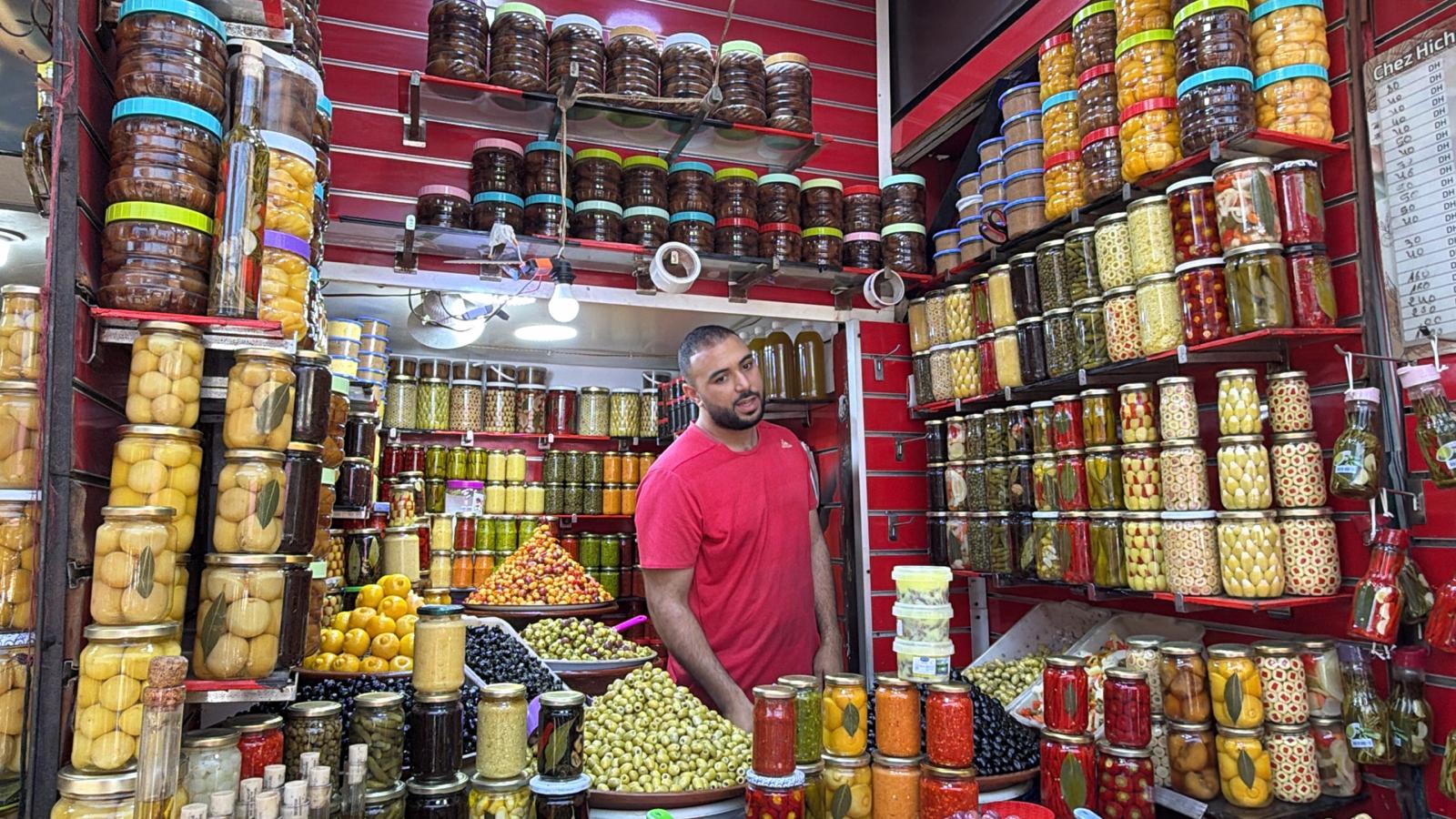
In the evening, we went back to Jemaa el-Fna square to see the hustle and bustle and the street food stalls. And there, Marrakech showed us its true face: alive, colorful, noisy, enchanting. We forgot the frustrations of the day.
The air conditioning episode
I had forgotten to mention: upon arriving in Marrakech, the vehicle's air conditioning had failed. I wrote to the rental company. No response. I ended up calling them.
Their solution: return to Casablanca to change cars. Except the next day I had a five-hour drive south – adding a six-hour detour was impossible. After more than 30 minutes of haggling, I mention that my mother is 75 years old and won't be able to handle the desert heat without air conditioning. That if the car isn't suitable, it's their problem. They finally agree to an exchange in Marrakech. Meeting scheduled for 10:30 the next morning.
Where to sleep: A riad in the medina remains the best way to experience Marrakech from the inside. Book early, confirm the exact address with the owner, and ask him how to reach the entrance on foot from the nearest parking – this will save you a lot of trouble.
Ouarzazate and the Dades Valley — The Road as the Destination
Delayed departure, but a magnificent drive
The initial plan was to leave at 8 AM. With the car exchange scheduled for 10:30 AM, we pushed it back to 11:15 AM – by which time the new rental agent arrived 20 minutes late, in true Moroccan style.
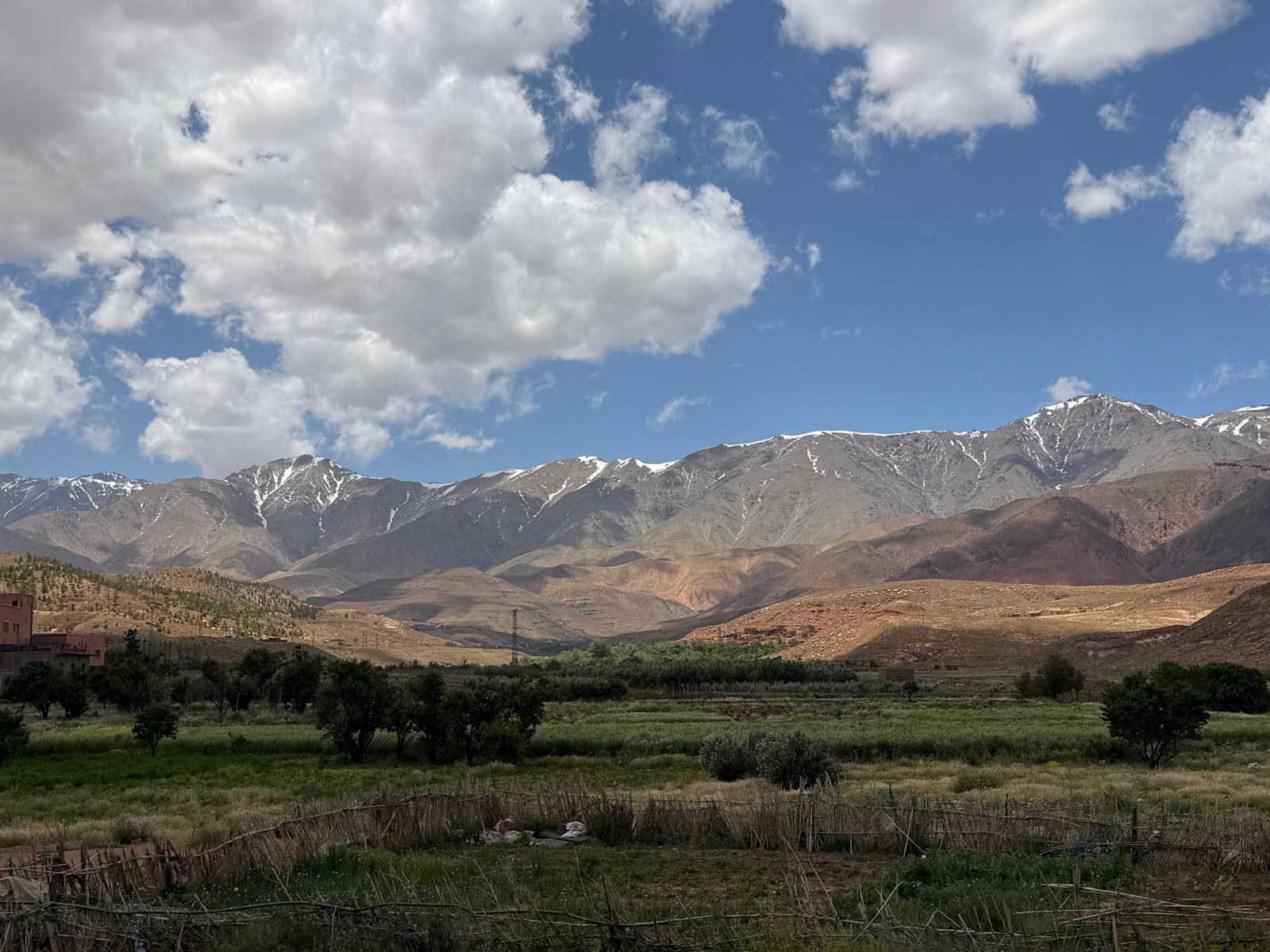
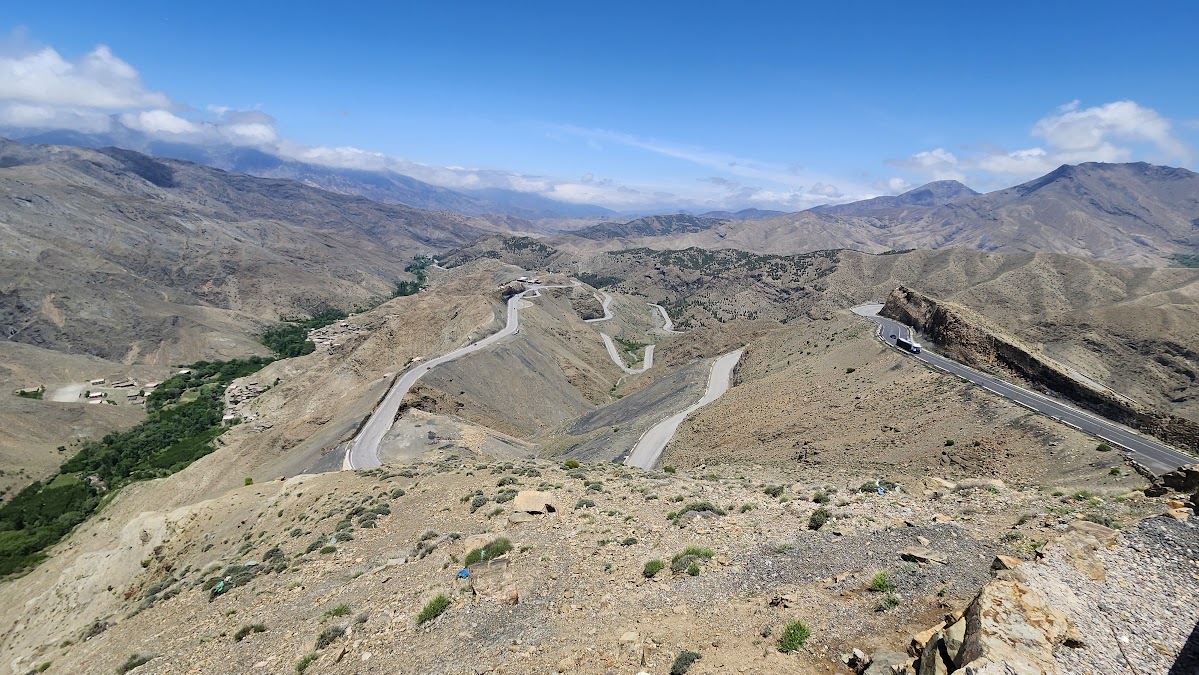
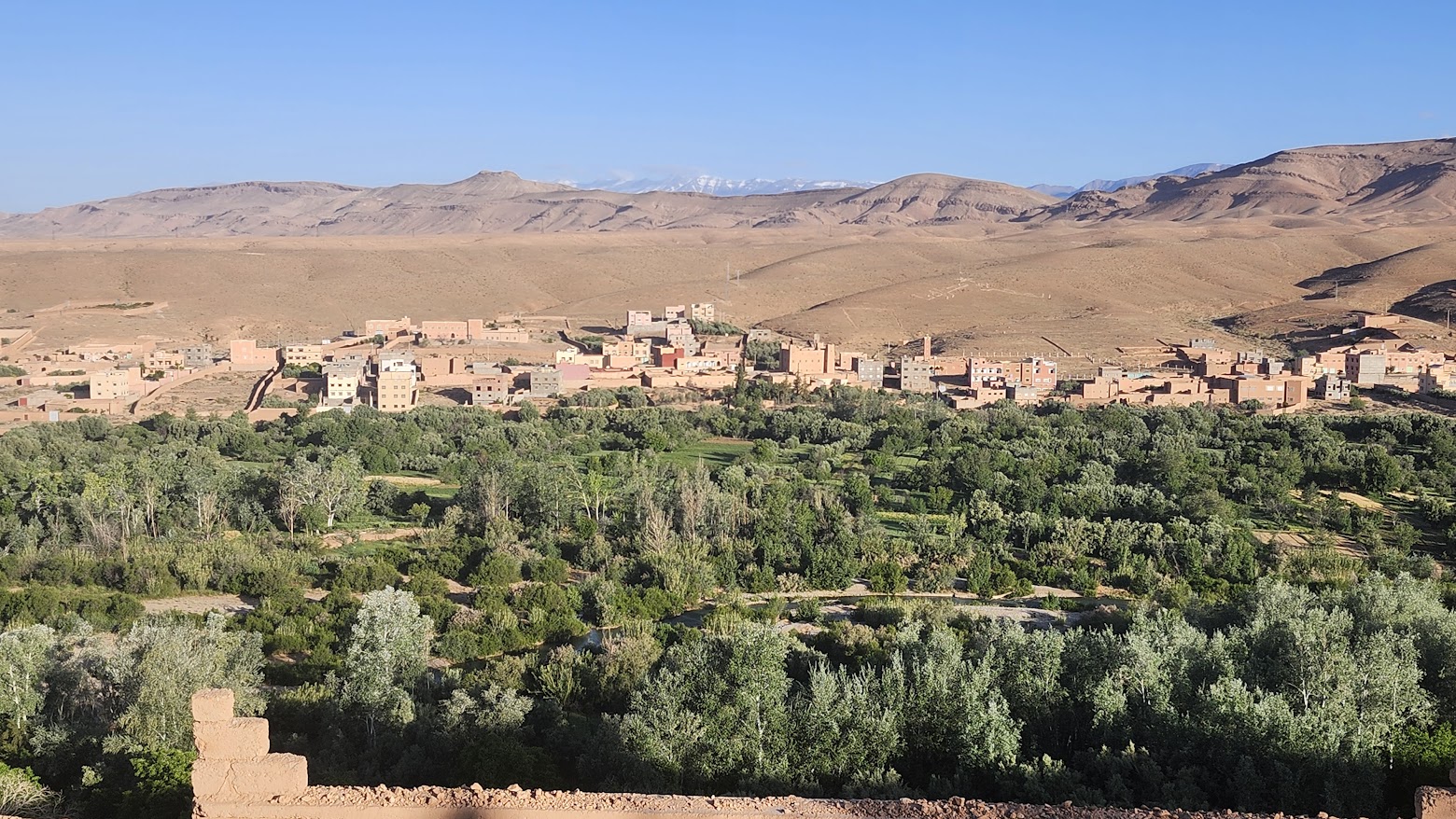
But once on the road, you forget all that. The landscape changes completely as soon as you leave Marrakech to the south: snow-capped Atlas Mountains, ochre rocks, surprisingly green and lush valleys. We stop several times to take photos. It's one of the most beautiful drives we've done.
Ouarzazate and Atlas Studios
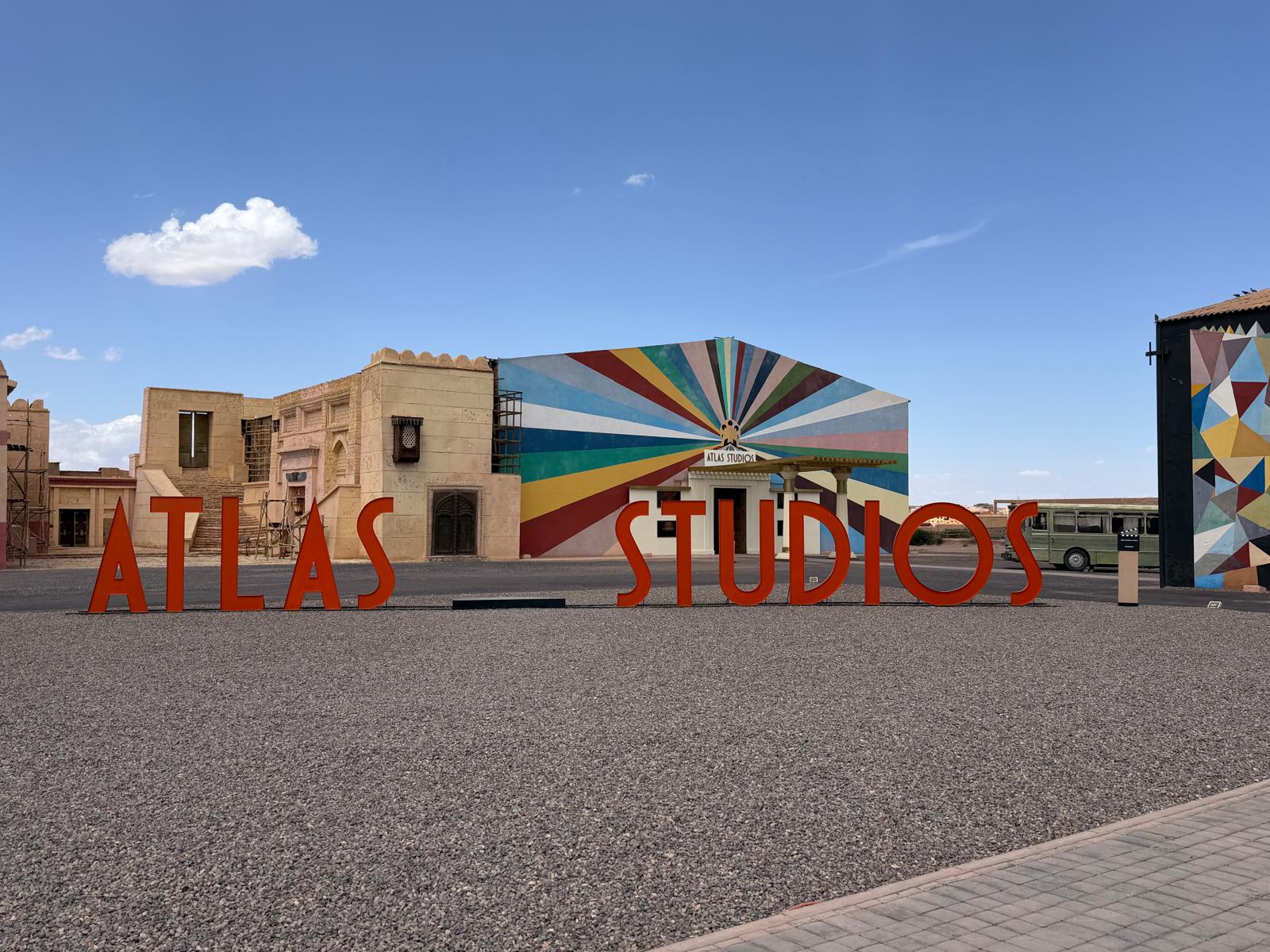
We arrive in Ouarzazate in the late afternoon, just in time to catch the last guided tour of Atlas Studios – the famous film studios where blockbusters like Gladiator, Lawrence of Arabia or scenes of Game of Thrones. We read the site of Game of Thrones Due to lack of time, but the studio tour is well worth it. The guide is funny, knowledgeable, and the tour is much more interesting than we expected.
The Dades Valley and the dream riad
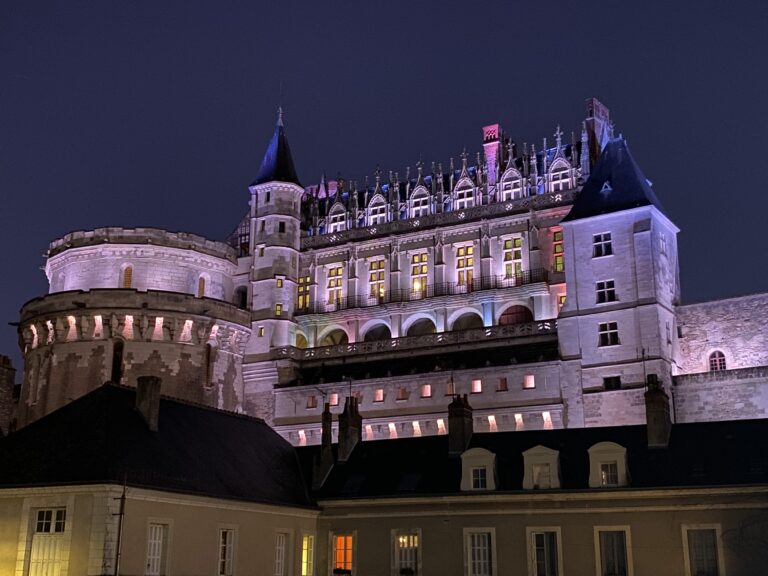
The road between Ouarzazate and Dades is flatter and less spectacular than what came before – honestly, not the most exciting part of the journey. But the arrival at the riad more than makes up for it: a building that looks like a medieval castle sprung up in the middle of nowhere, in absolute silence. The kind of place where you put down your bags and can finally breathe.
Where to sleep: Riads in the Dades Valley often offer excellent value for money - look for something with a terrace to enjoy the scenery in the evening.
Merzouga — the desert, the camels, and my mother on an ATV
The Todra Gorge
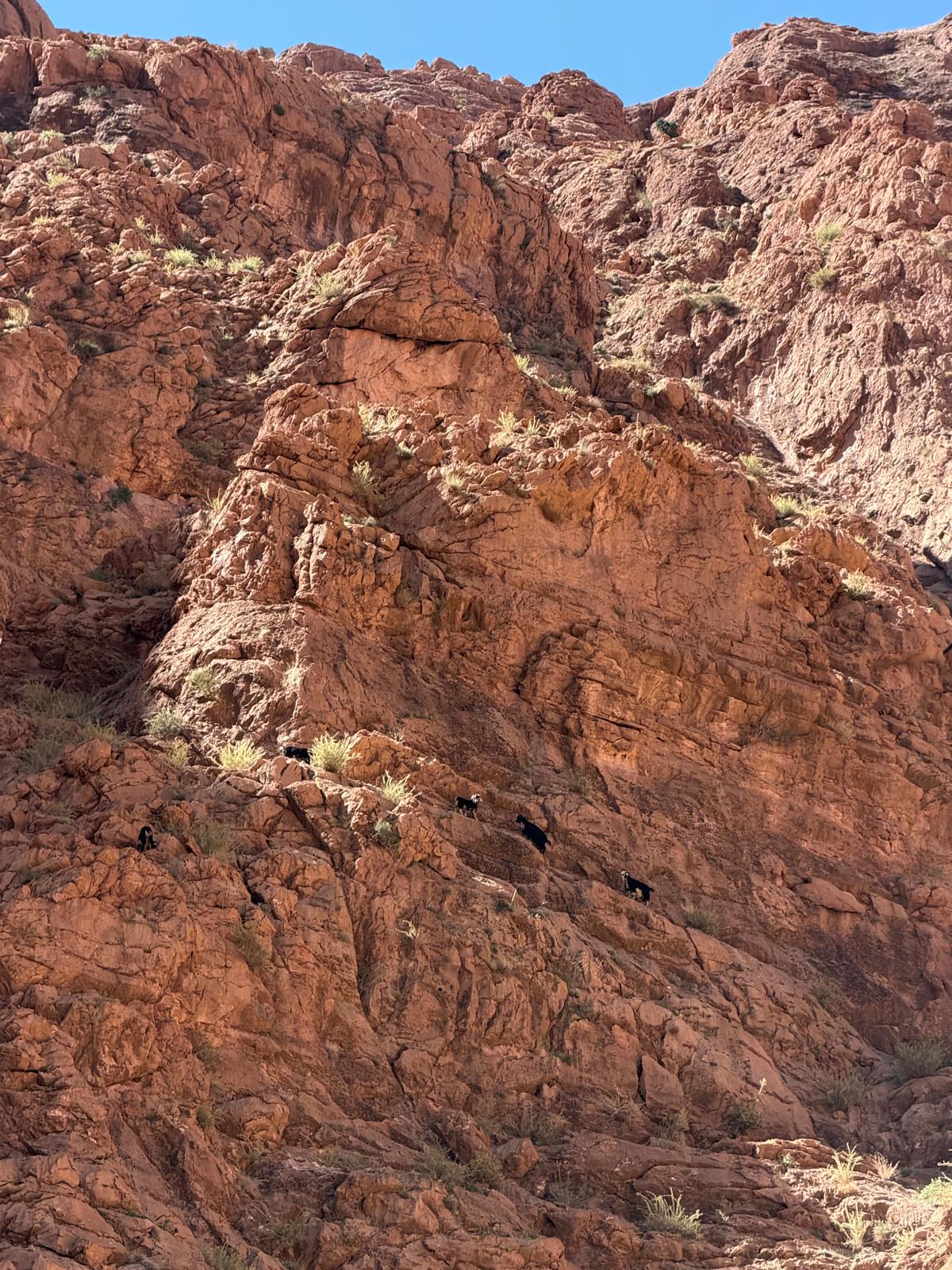
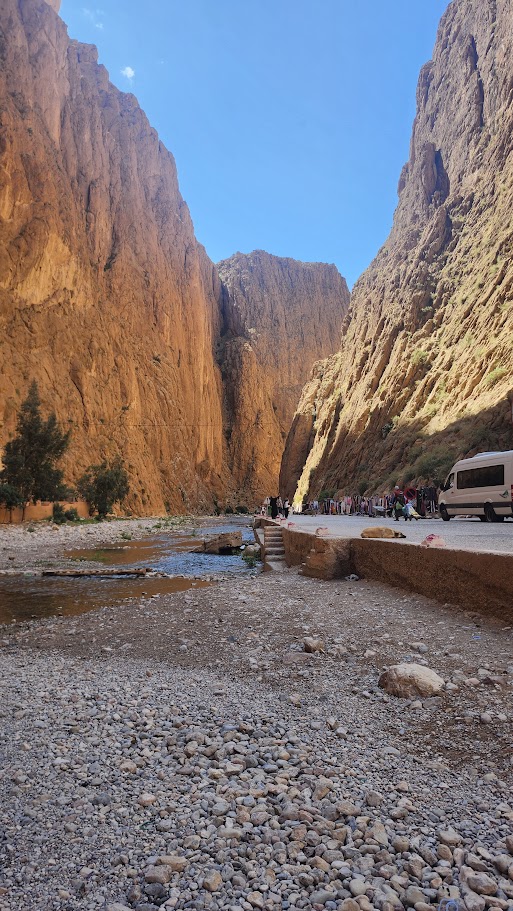
On the way to Merzouga, a must-see stop at the Todra Gorge — cliffs rising over 300 meters on either side of a narrow canyon crossed by a river. It's extremely touristy, but arriving early makes all the difference. We had a quiet hour before the crowds started pouring in. Magnificent.
Le Riad Mamouche - An absolute favorite
Just before arriving in Merzouga, we received a message from the owner of Riad Mamouche. He had organized our first night in a tent in the desert, but he warned us: it's very hot right now. Upon arrival, he recommended that we enjoy the pool before heading to the bivouac late in the afternoon.
That's exactly what we did — and it was the right plan.
I highly recommend this riad. The owner is attentive, generous, and full of good advice. He thought of everything, anticipated our needs, and made our stay in Merzouga memorable—far beyond the dunes.
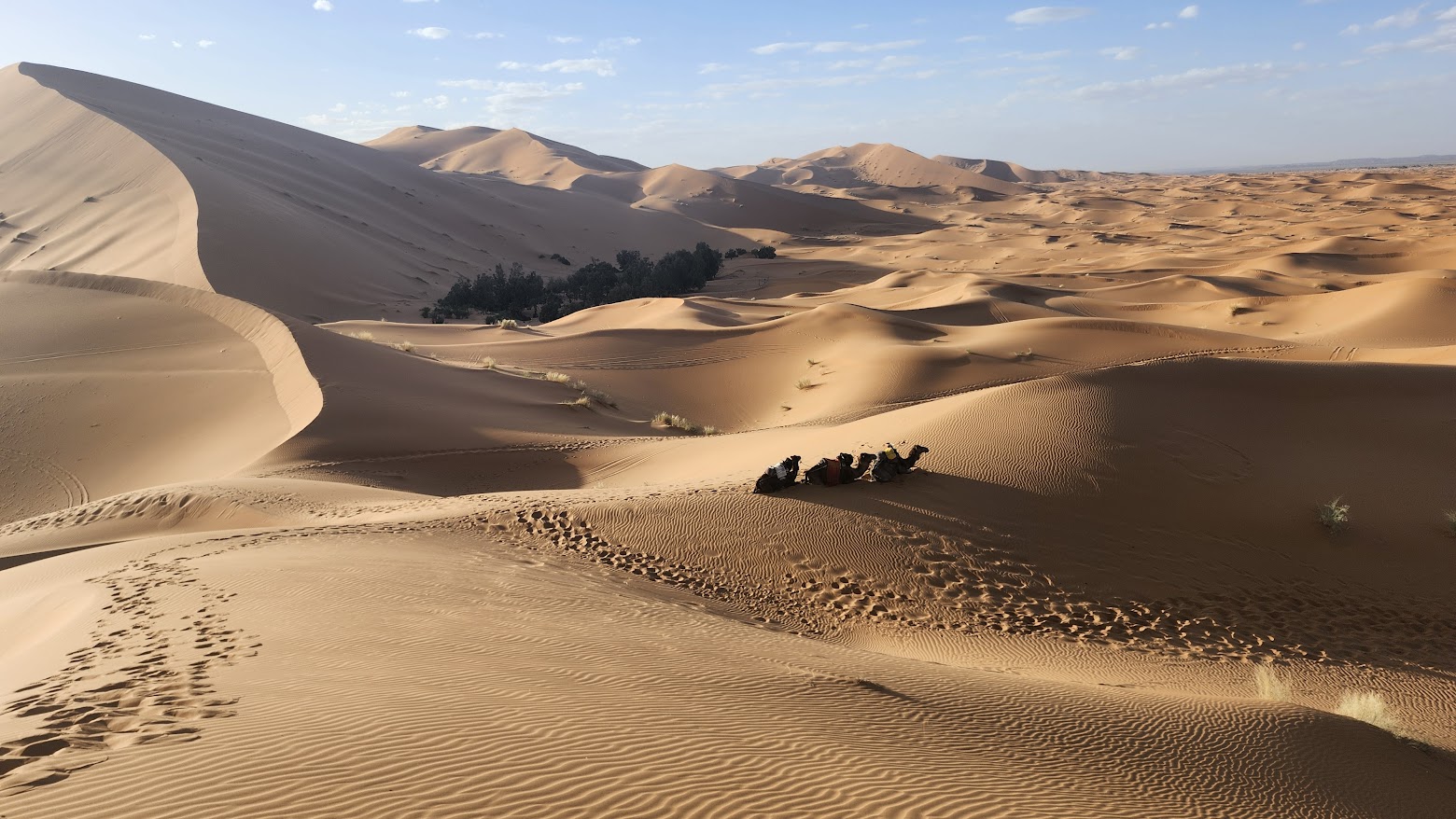
At 5:30 PM, an SUV picks us up to take us to our dromedaries. An hour and a half ride in the desert to reach the camp – it's long, and surprising at first (dromedaries are tall and move in jolts), but everyone loved it. And nobody wanted to take the SUV back.
Night at the bivouac
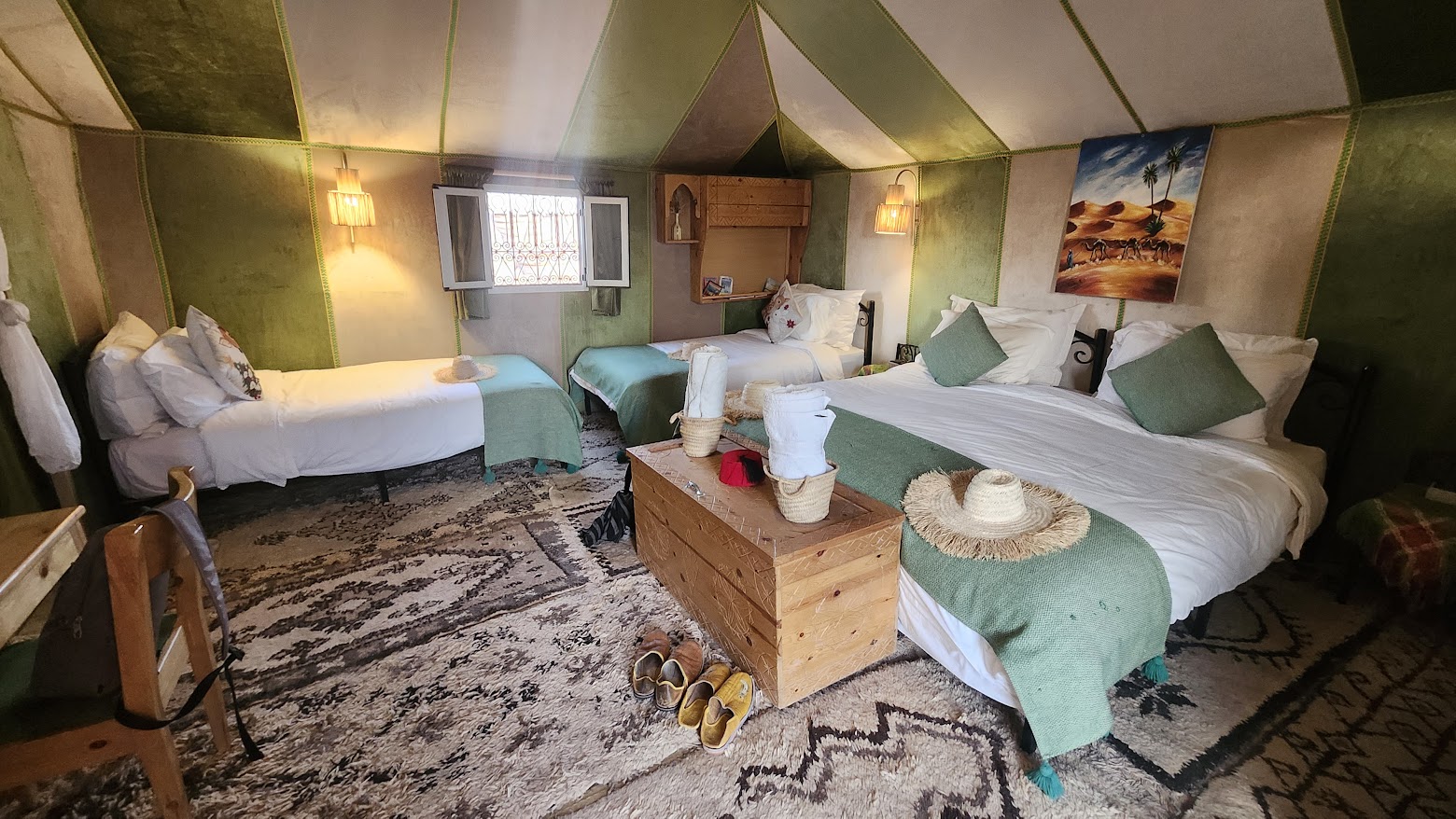
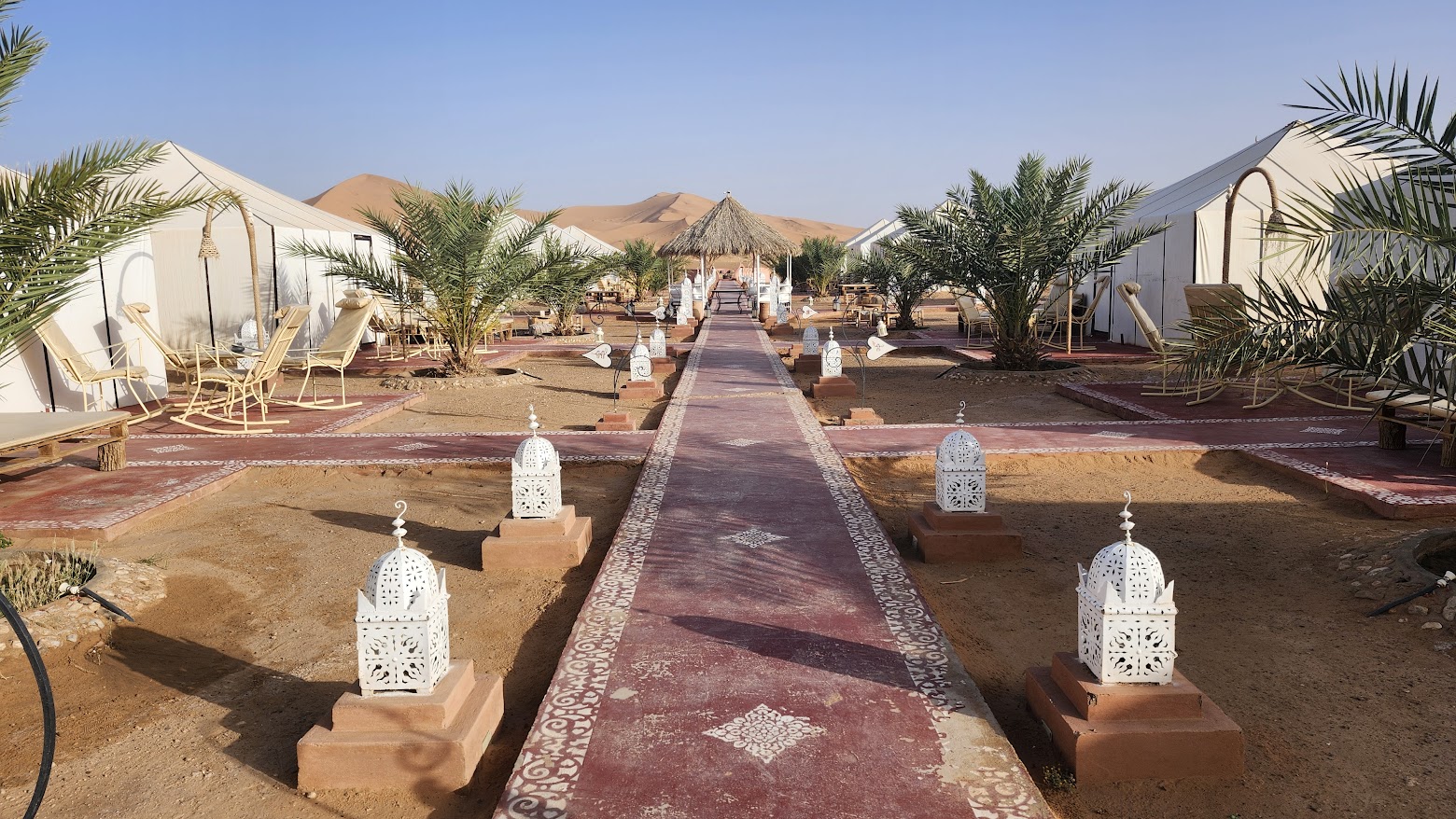
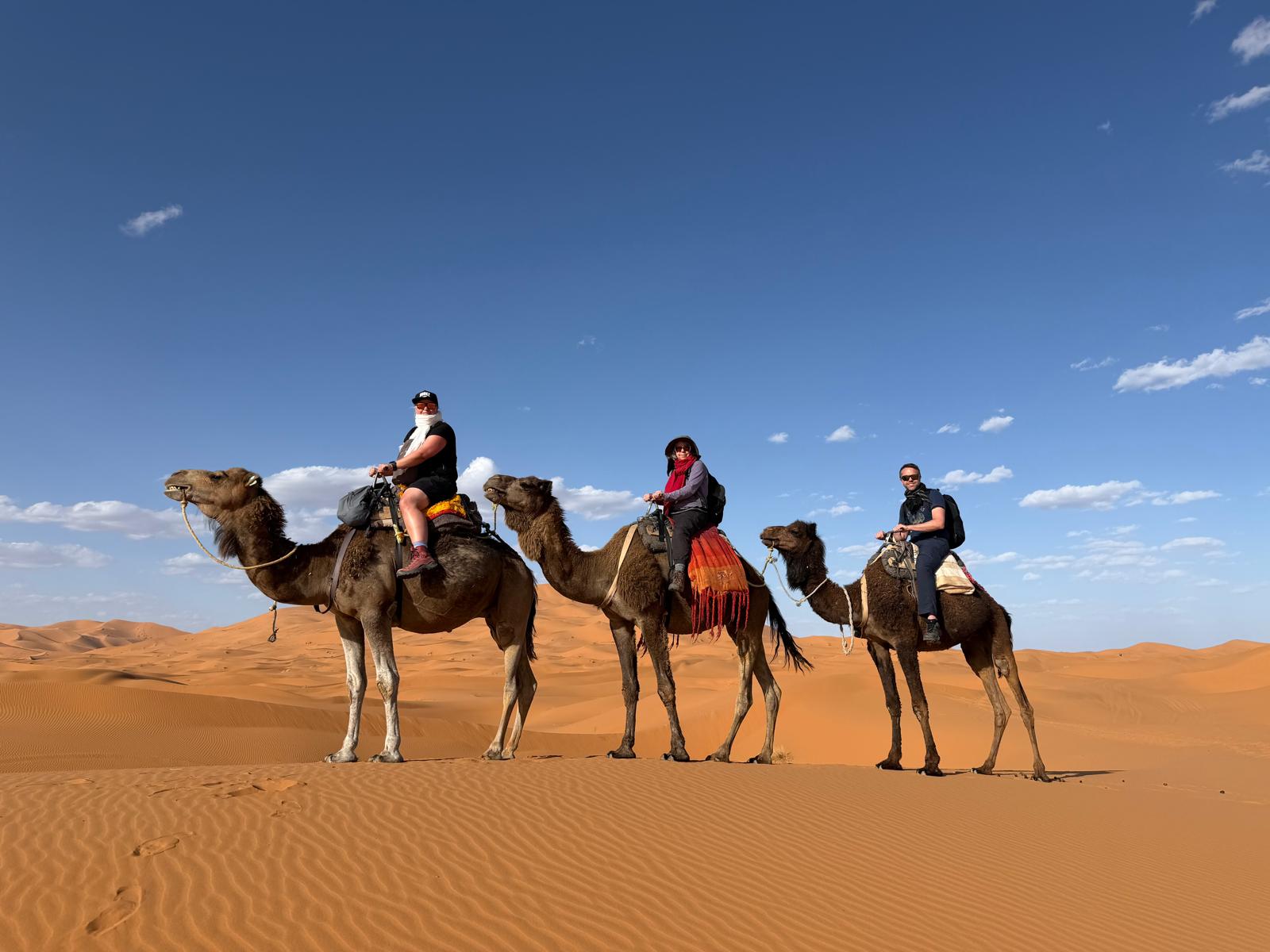
At the camp, we watched the sun set over the dunes. A quick shower. And a dinner that we didn't expect to be so good—generous, flavorful, and served with care. Followed by a campfire, drumming, and Berber songs and dances late into the night.
It had been a long time since I'd seen my mother smile so much.
The return of the SUV... extreme version
The next morning, a hearty breakfast, then back towards the riad. I ask the driver if we can go through the dunes instead of the track. He asks us if we're scared. We say no. He turns the music up loud.
What followed was something between a rollercoaster and an action movie: high-speed climbs, steep descents, 90-degree turns at the top of the dunes. The driver drove as if the dunes belonged to him—because, clearly, they did. We had an incredible amount of fun. I would have spent the whole day there.
The oasis tour — and my mom's mountain bikes
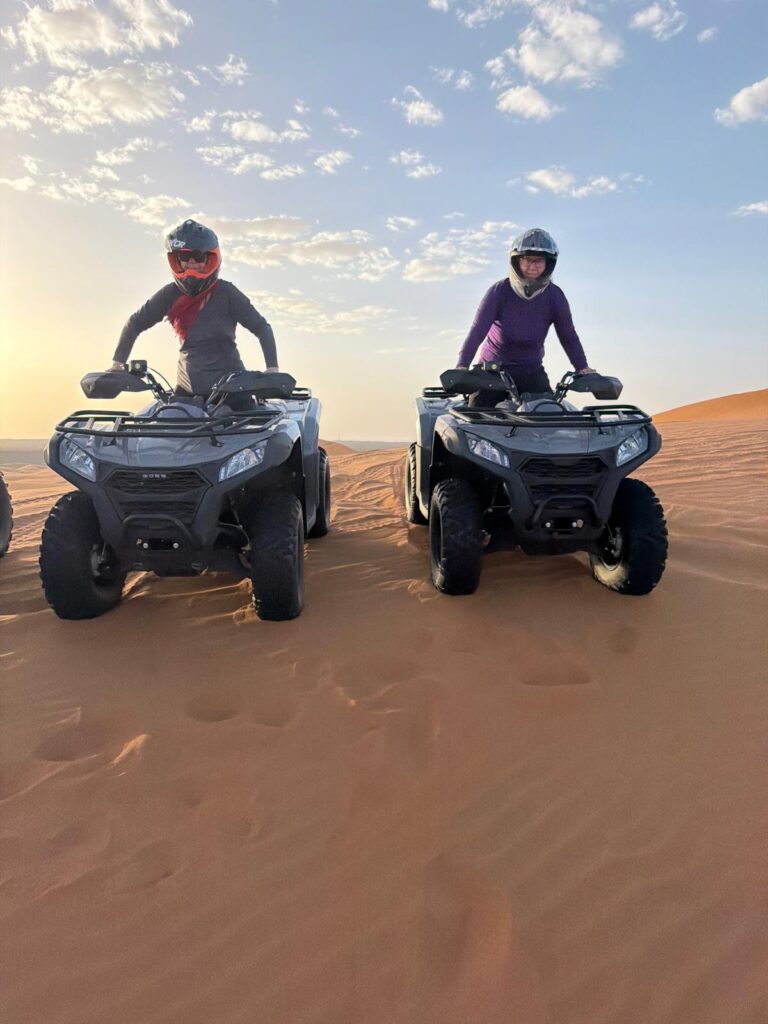
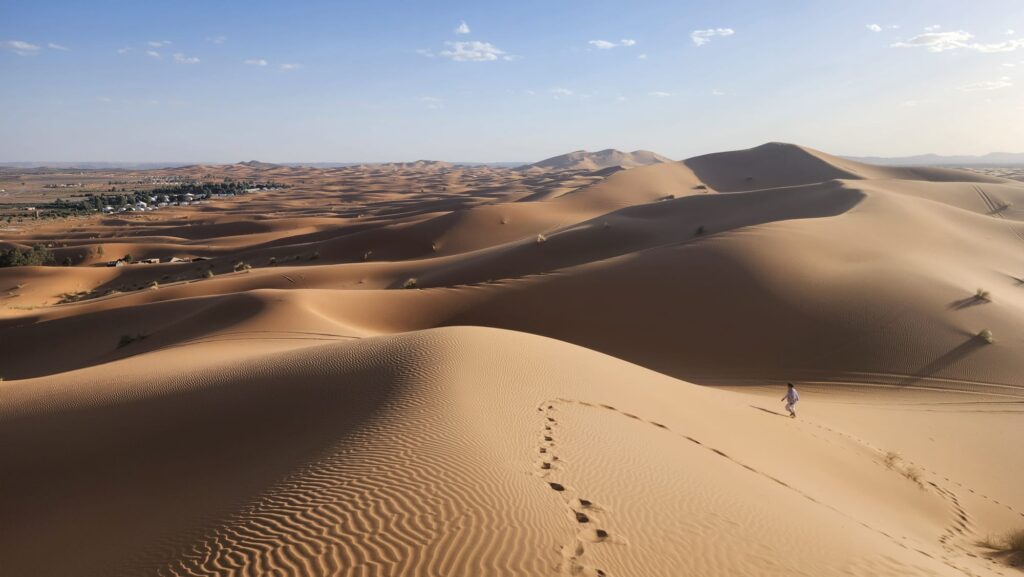
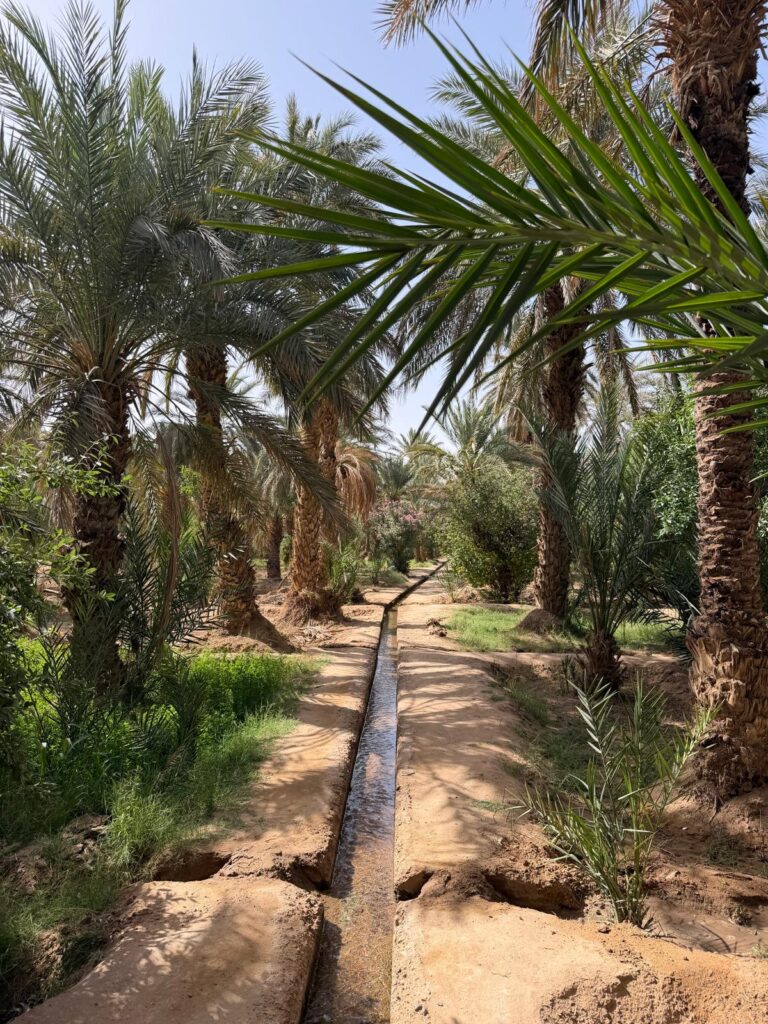
Back at the riad, the owner offers us a three-hour tour of the surroundings: oasis, village, nomadic camp, ghost village, a meeting with the Gnaoua people and their music, and the famous lake with pink flamingos. We accept on the spot.
It's interesting—less wild than the desert of the day before, but rich in cultural discoveries.
The plan for the afternoon: swimming pool and mountain biking in the evening in the dunes. Except I get sick. Food poisoning—I think it was the tea I had with the Gnaoua, but I can't be sure. I end the day in my room.
My sister and my mother, they went mountain biking without me.
My mother had said no for two days. She was supposed to stay by the pool. Finally, at 75, she sped off into the dunes while her son was flat out in his room.
I will remember this for a long time.
Where to sleep: Riad Mamouche in Merzouga — without a doubt. Book the package that includes an overnight stay in a bivouac.
The Road to Fes - Surviving a Seven-Hour Drive
The next morning, I wake up feeling completely off. Food poisoning, with a seven-hour drive ahead of me. I don't have a choice.
I'm trying to eat. Nothing is left. We buy a 7-Up at the first grocery store. It's about the only thing that gets me through the day.
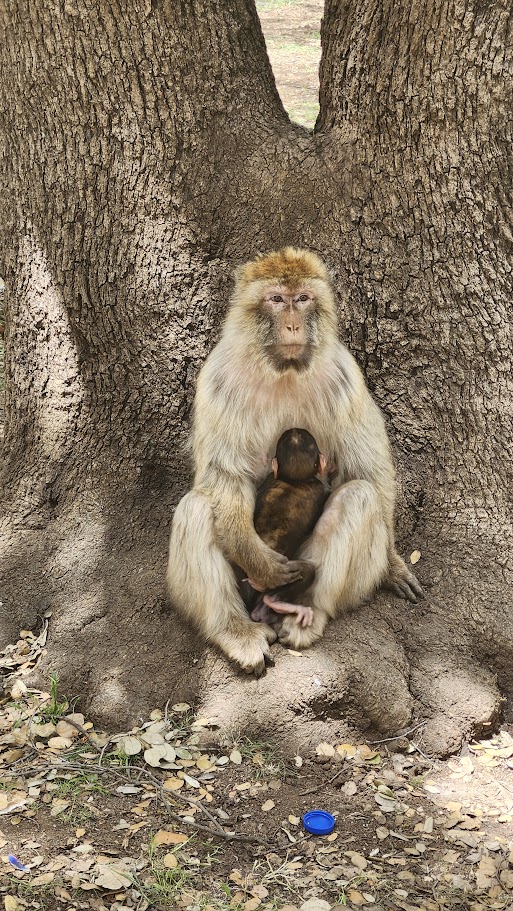
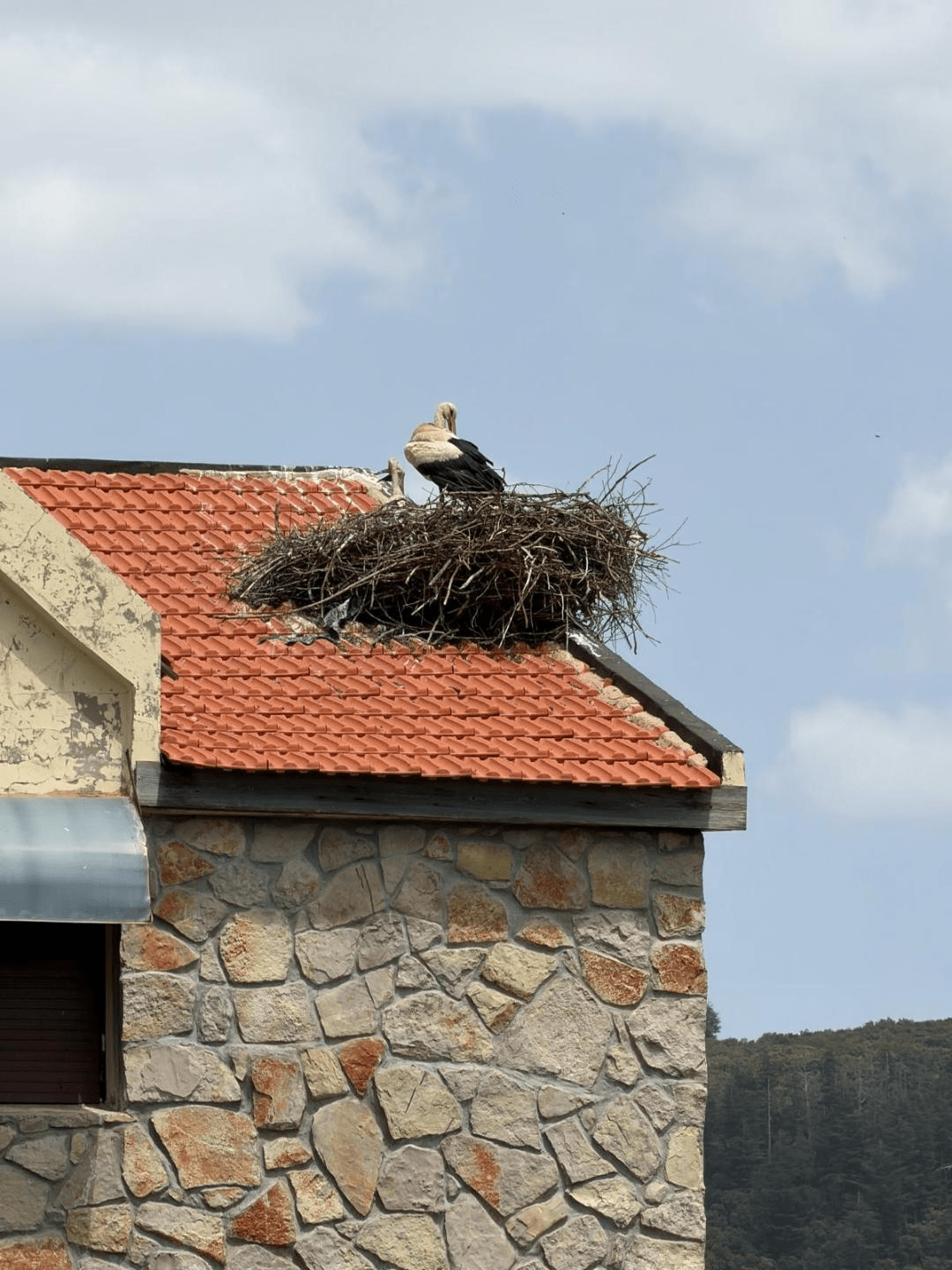
And then, somewhere along the road, we make a little detour into a pine forest. As soon as we get out of the car, we find ourselves surrounded by Barbary macaques—they come from everywhere, curious, uninhibited, some climb on us, others rummage through our clothes. I laughed so much and had so much fun that I completely forgot I wasn't feeling well. For the rest of the trip, the intoxication was almost a memory.
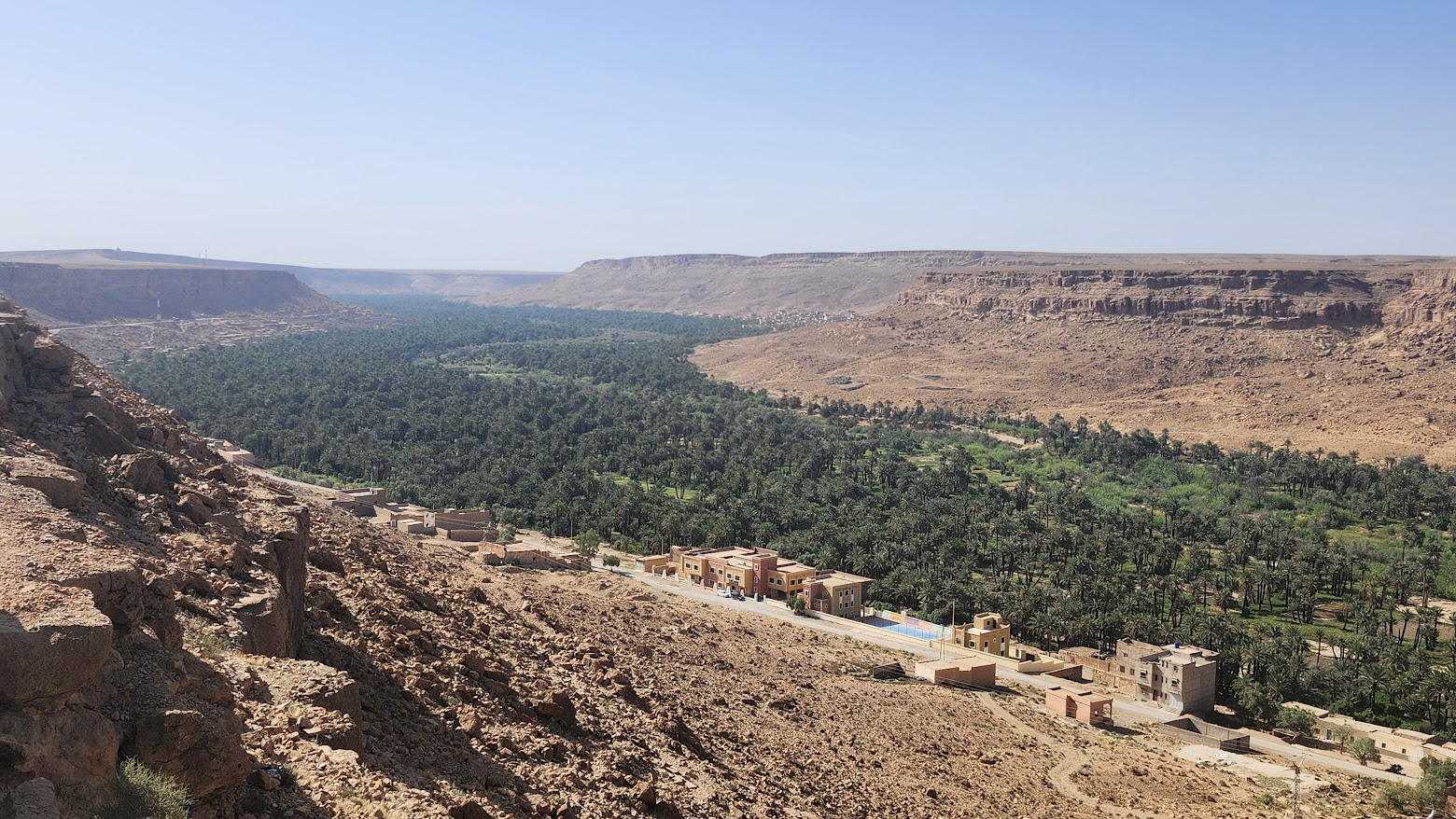
The road between Merzouga and Fes is magnificent—constantly changing landscapes, impossible rock colors, breathtaking panoramas. Under other circumstances, I would have wanted to stop everywhere.
We arrive in Fes around 6 p.m. Shower, light dinner, sleep.
Fes — the most densely populated medina in the world
A day with a guide
We had booked a guide for a seven-hour tour — with the promise of exploring off-the-beaten-path alleyways.
Our guide greets us at 10 AM. She's warm, knowledgeable, and passionate. She begins by telling us about the history of Morocco, its dynasties, and Fes in particular – and then we enter the medina.
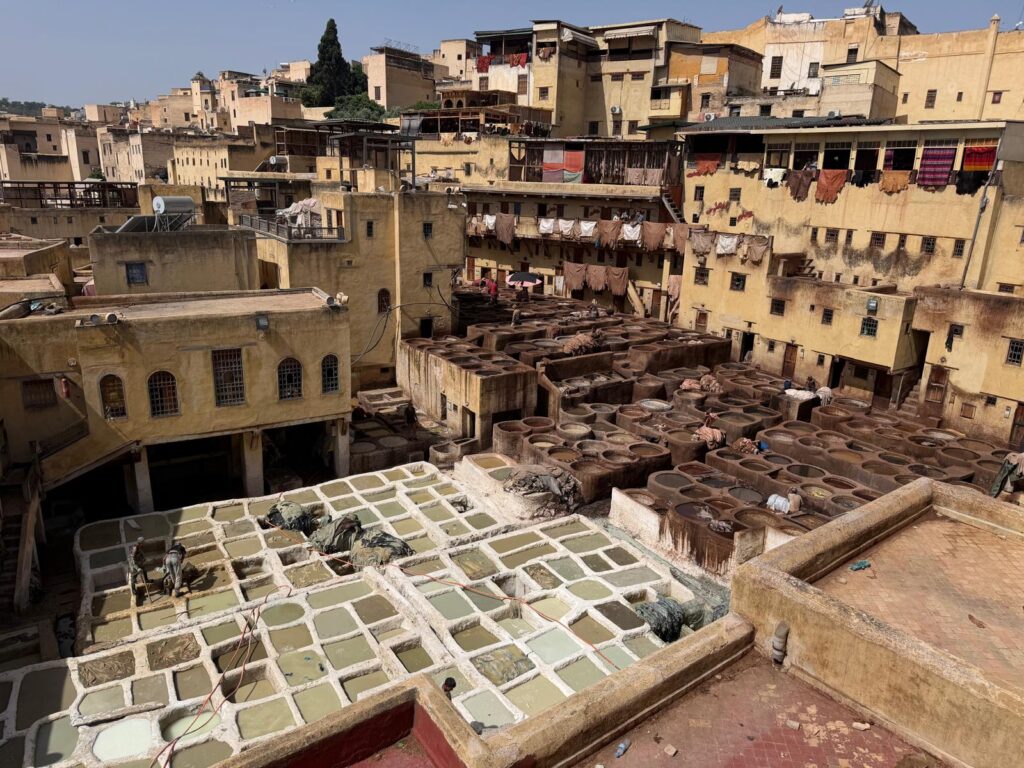
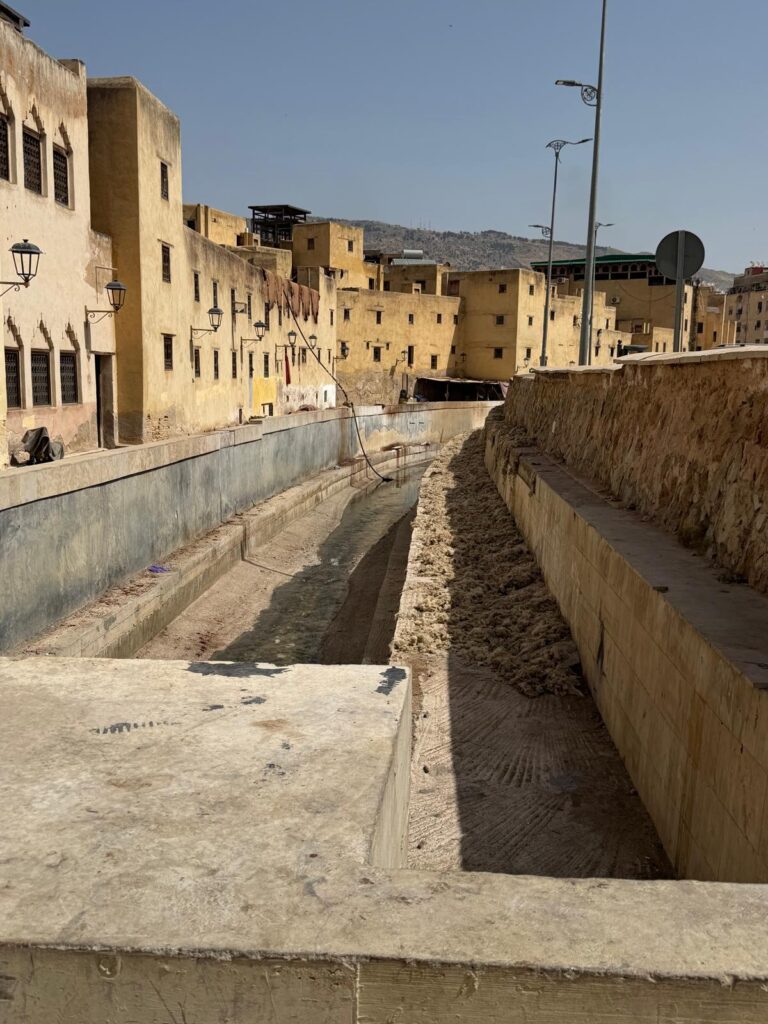
The following is a day that passes in five minutes: the endless alleys, the Bou Inania Madrasa (14th-century Quranic school), the copper artisans, a traditional textile factory, and of course the tanneries—this time visited properly, with a high-up view of the colorful vats and explanations that truly bring meaning to what you see.
Honestly, it was less «off the beaten path» than we were promised. But the quality of the explanations and the organization of the day made the visit very satisfying. The Fes medina should be visited with a guide — without one, you get lost in ten minutes and miss the essentials.
💡 Advice: Book your guide through your riad or a recognized local agency. Plan for a full day – the Fes medina is the largest pedestrian medina in the world, and it deserves the time you give it.
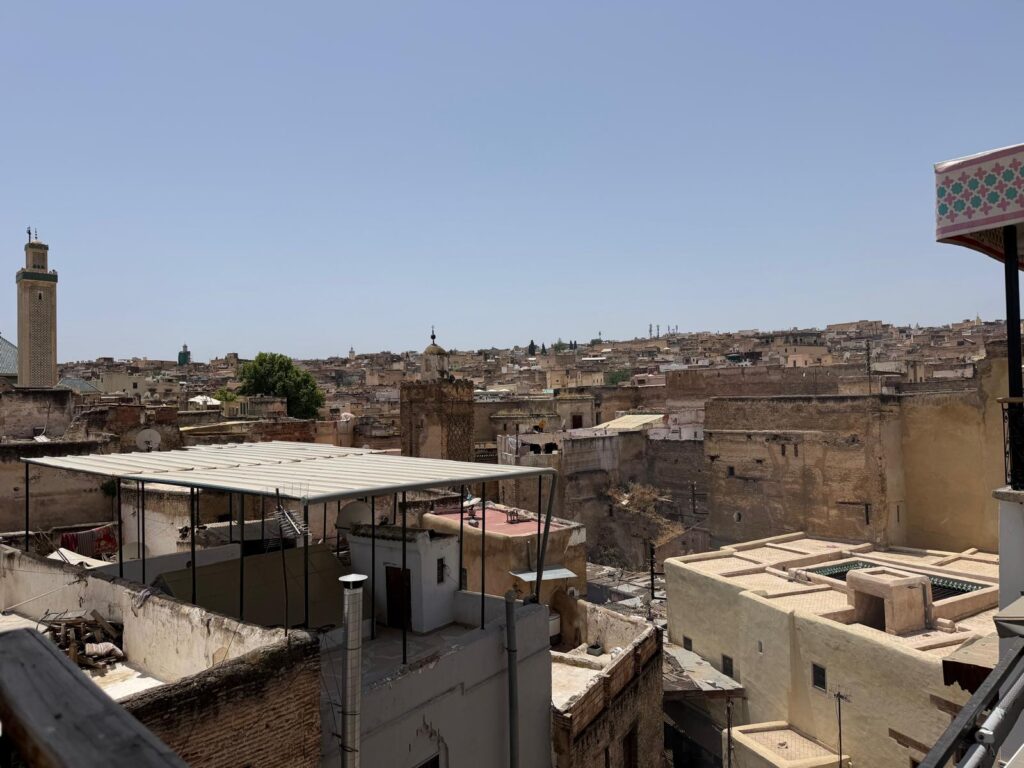
Where to sleep: A riad in the medina, ideally with a terrace — the view over the rooftops of Fes at the end of the day is an experience in itself.
Volubilis, Rabat, and the return to Casablanca — a day of the unexpected
Volubilis before the crowd (almost)
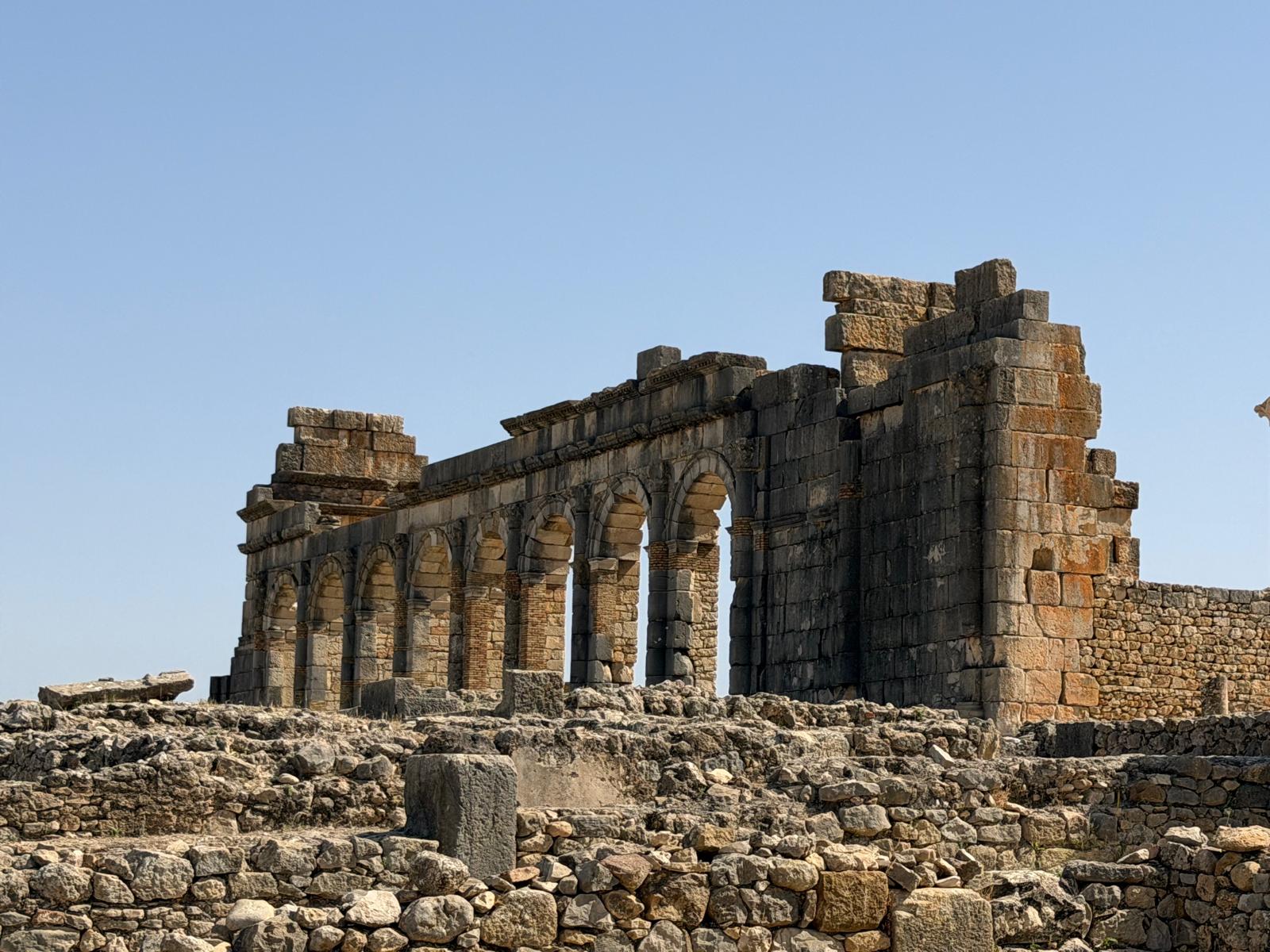
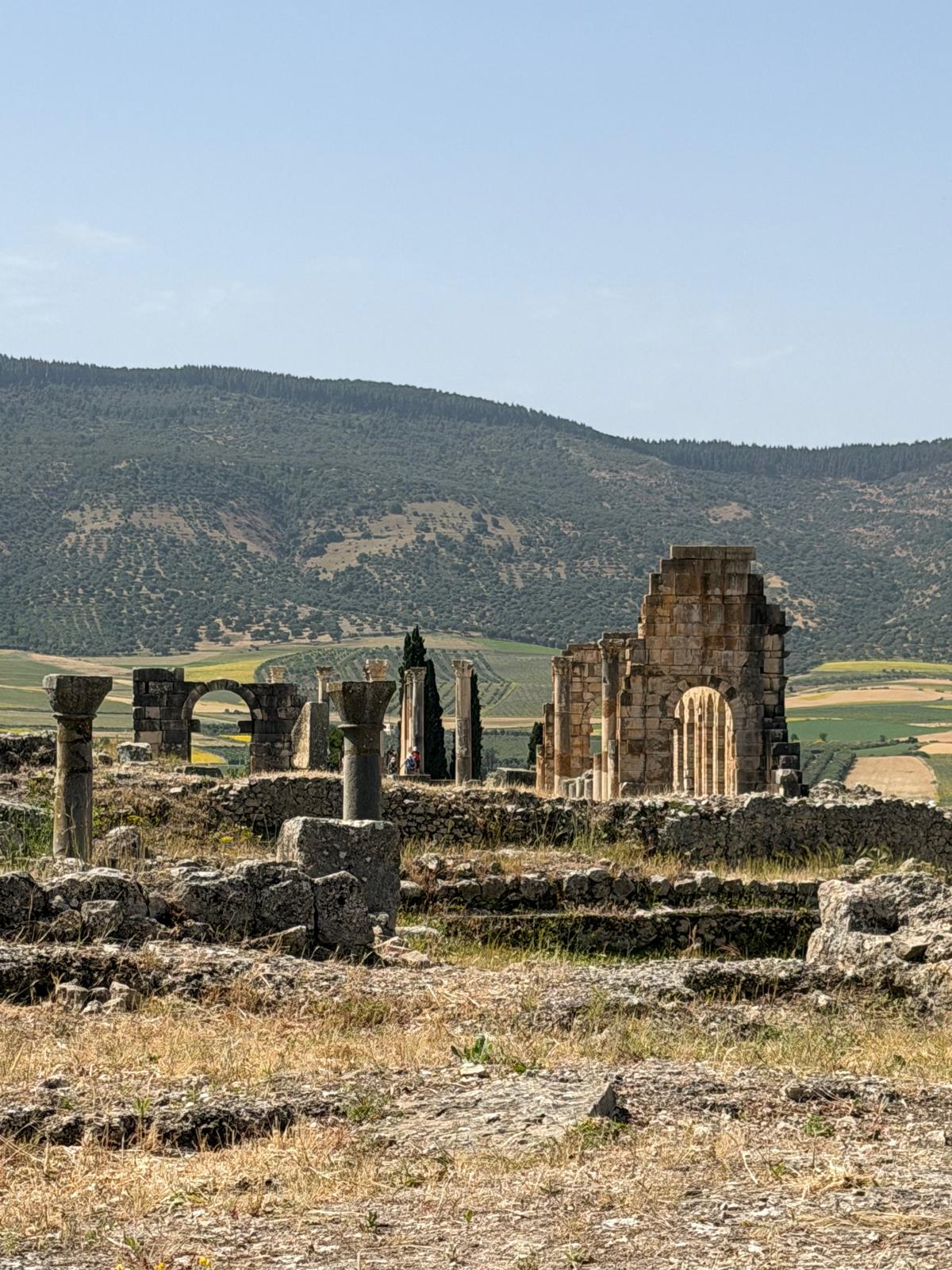
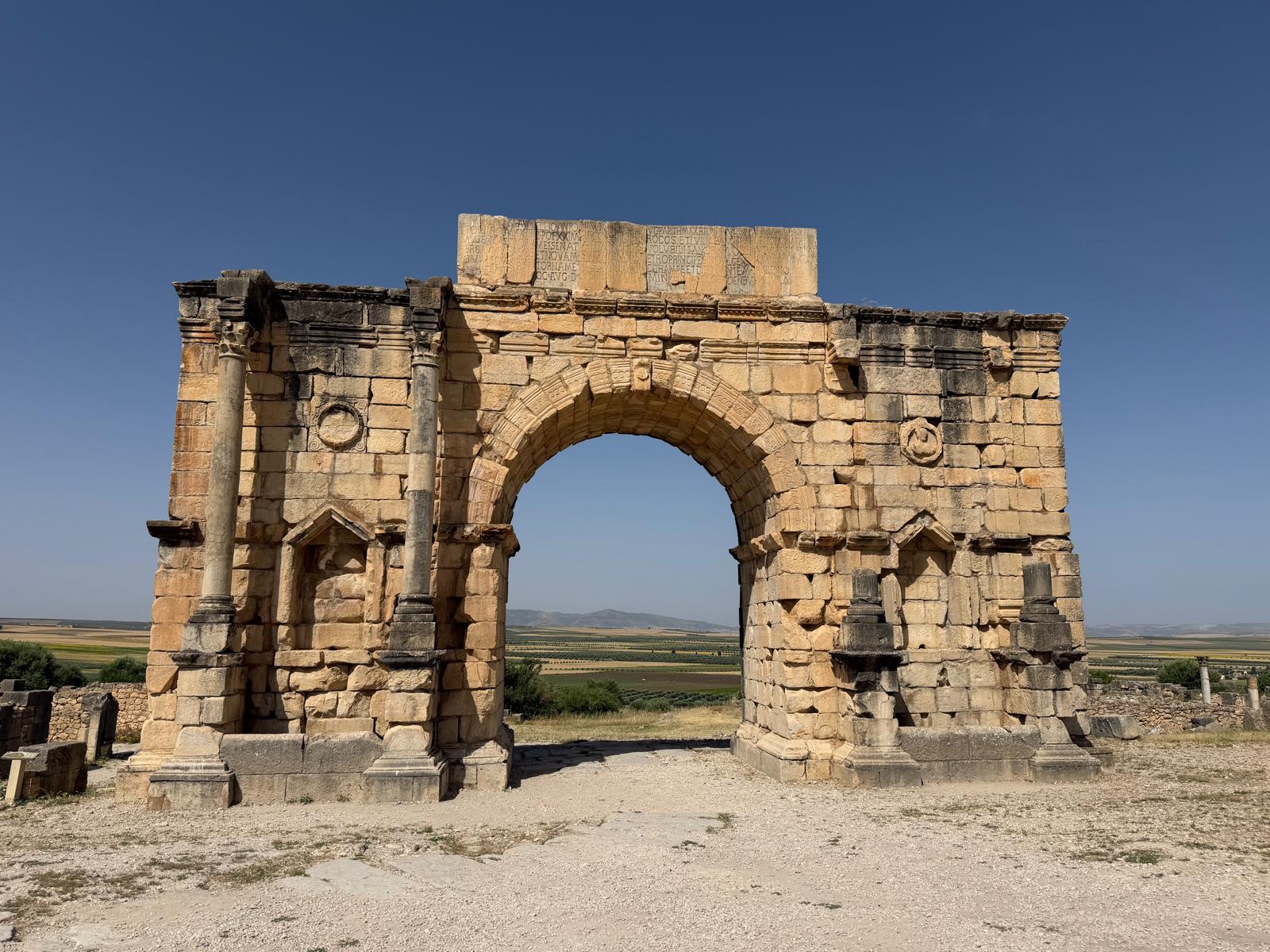
For the last day, we had planned to leave early to visit the Roman site of Volubilis before the heat and the tourists. We arrived half an hour before the groups — but the mercury quickly rose to over 40 degrees.
The site is impressive: remarkably well-preserved Roman mosaics, columns silhouetted against a Moroccan landscape, and an atmosphere that completely contrasts with everything we've seen over the past week. A must-see stop if you're passing through.
Rabat — and the meeting with the police officer
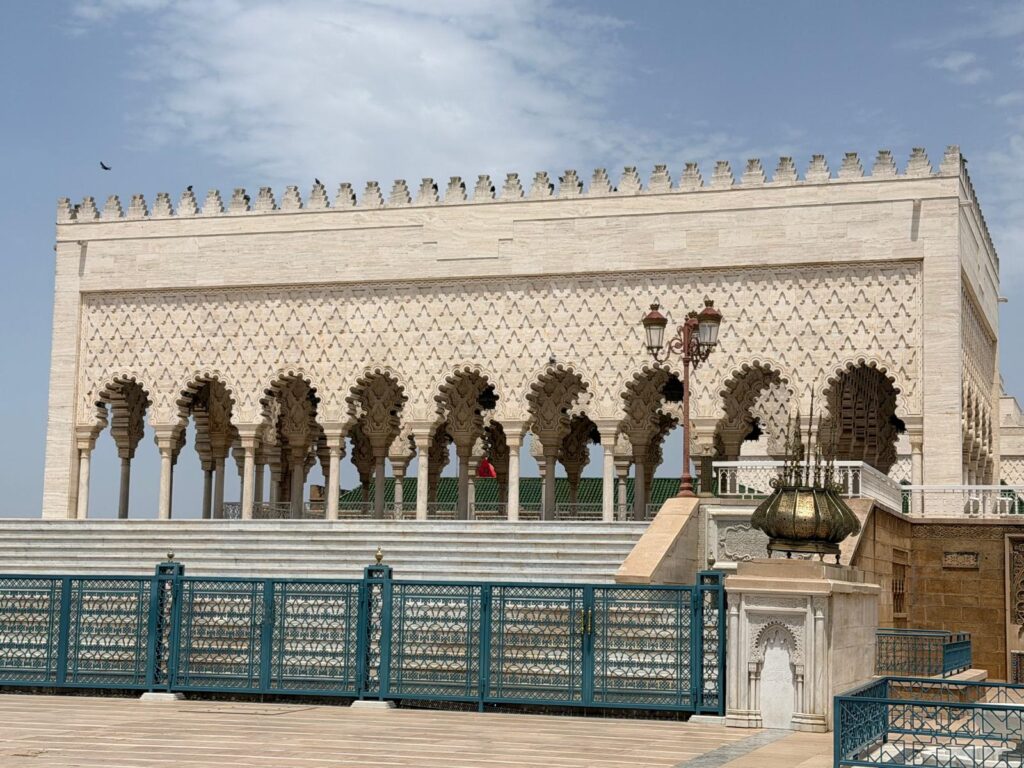
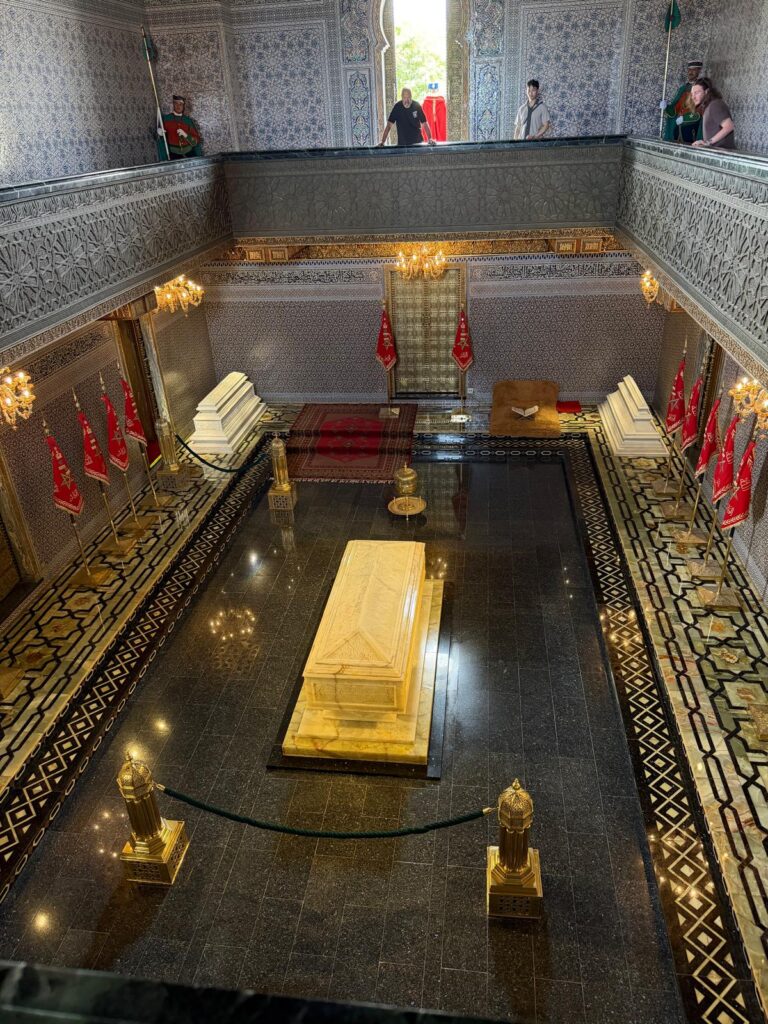
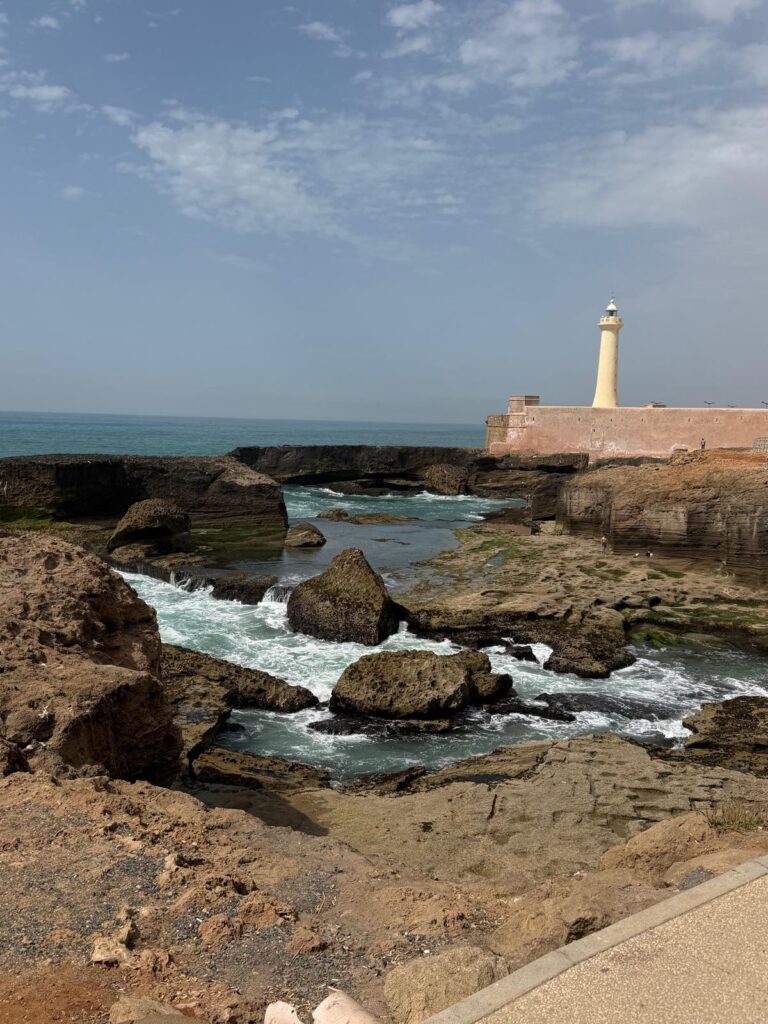
From Volubilis, we decide to drive to Rabat to see the Hassan Tower, the Mausoleum of Mohammed V, and the seaside.
Starting from the parking lot to head to the medina, the GPS tells me to turn left. I see the double lines in the middle—I tell my sister that we're not allowed to. She tells me everyone does it, that the GPS says so. I hesitate. I do it anyway.
A police officer runs up.
He took my papers and asked for 400 dirhams. I had 200 dirhams left in my pocket. I had to go back to the car to get money from the ATM, come back to see him — and he kept shouting at me despite my full cooperation. I was in the wrong, I didn't haggle. But his attitude was unnecessarily condescending and aggressive. We lost over an hour.
What makes the anecdote even more striking is the contrast: throughout the journey, we had been stopped by at least four police checkpoints on the roads. Each time—handshake, smile, have a good trip. People of disarming kindness. The one in Rabat was the absolute exception.
We'll forget about the planned visit, it's too late now. Off to the hotel near the airport.
Last stop before returning the car: a car wash. To avoid cleaning fees upon return. A small practical detail for great peace of mind.
Our budget for 8 days for 3 people
Our actual budget for 8 days / 7 nights for 3 people
- Flights Montreal–Casablanca (with layover) : ~920 $ per person = 2,760 $ for 3
- Car rental 8 days : 175 $
- Gasoline : ~100 $
- Accommodations (average ~$170 per night × 7) : ~1 190 $
- Meals, visits, guides, camels, mountain bikes, unforeseen events, souvenirs : ~775 $
- Actual total: ~6,000 CAD ($) for three people, all-inclusive
The biggest expense remains flights, as always from Quebec. But once there, Morocco is surprisingly affordable — especially cars and gas, which cost a fraction of what you'd pay in Europe.
Checklist before leaving for Morocco
Documents
- Passport valid for at least 6 months after return
- Canadian Driver's License (valid for driving in Morocco during a tourist stay)
- Comprehensive travel insurance (medical + cancellation)
- Printed and digital reservations
- Bank card with no exchange fees (Wise, Tangerine, etc.)
- Dirhams in cash — many transactions are done in cash
Clothing
- Light clothing + a warm layer for the desert at night (it cools down quickly)
- Modest clothing for medinas and religious sites
- Closed walking shoes — the cobblestones are unforgiving
- Hat and sunglasses — the desert sun doesn't forgive
Day bag
- Reusable water bottle and large capacity
- High protection sunscreen
- Anti-diarrhea Medications and Oral Rehydration (Personal Experience)
- Small dirham bills for tips
Practice
- eSIM GigSky or Maya Mobile
- GPS or Google Maps offline mode - essential in medinas
- Type C/E Power Adapter
In conclusion
Eight days on a road trip in Morocco with my mother and sister: it's probably one of the most intense and memorable trips we've taken together.
Intense because Morocco never really lets you catch your breath. There's always something to negotiate, understand, or decipher. The unexpected is part of the journey — the light Check Engine, the air conditioning breaking down, the spontaneous guide waiting for his commission, the policeman from Rabat, food poisoning in the middle of the desert. We wouldn't recommend anyone go through that, but we regret nothing either.
Memorable because, amidst all of that, there were moments we will never experience anywhere else. The dunes of Merzouga at sunset. The SUV driver who drives like a maniac with the music blasting. The Berber campfire under a starry sky. And my 75-year-old mother, speeding on a quad bike through the dunes while her son is sick in his room.
If you had three pieces of advice to give to those who want to redo this trip: hire an official guide in Marrakech and Fes, choose your car rental companies carefully and check everything upon pickup, and leave room for the unexpected — that's often when Morocco shows itself most generous.
The rest, you'll find out for yourselves. And you'll tell us about it.