
Loire Valley and Normandy Road Trip: Castles, Wines, and History – Our 10-Day Itinerary
📋 Practical Information
Our first trip to France, we experienced it in Paris, with my parents. We didn't have children at the time, and we still have wonderful memories of it today. Paris charmed us with its energy, its monuments, and that very special atmosphere that can't be found anywhere else.
But it must be said: Paris is intense. Between the metro, the kilometers walked, the queues, and the frantic pace, you return amazed... but also a little exhausted.
For this new trip, we wanted something different. We wanted a gentler, quieter France, closer to the people and the landscapes.
So we set off as a family, with my parents and my sister, on a road trip where the idea wasn't to see everything, but to truly experience each stage. Driving along pretty country roads, discovering villages full of character, visiting a few castles, stopping at wineries, and simply taking our time.
Yes, we wanted to see the Loire Valley castles, but we also wanted to taste, listen, connect, and slow down. And honestly, traveling with your parents as an adult is something precious. There's no more the logistics of young children, nor the constant compromises: only the pleasure of being together, discovering, and sharing.
In this guide, we'll tell you about our complete itinerary through Orléans, Chambord, Blois, Amboise, Tours, Le Mans, Caen, and Rouen. Eight stops in 10 days, with our discoveries, our favorites, and all the things we wish we'd known before leaving.
Our Loire Castles Normandy Road Trip Itinerary: 10 Days Day by Day
We made a big arc: going down from Paris towards the Loire, then back up towards Normandy via Le Mans. Geographically logical, it avoids backtracking.
- Day 1: Car pickup at CDG, direct route to Orleans (~1.5 hours). Quiet evening.
- Day 2: Orleans in the morning, then Chambord Afternoon. Nap in the region.
- Day 3: Blois — Town + royal castle. Overnight in Blois.
- Day 4: Amboise and Clos Lucé (Da Vinci's house).
- Day 5: Tours and caves in the region (Vouvray, Chinon).
- Day 6: Route to Le Mans — Car museum and old town.
- Day 7: Northern Normandy, arrival at Caen. Memorial in the afternoon.
- Day 8: Norman Coast — Landing beaches, Atlantic Wall.
- Day 9: Route to Rouen. Jumièges Abbey en route.
- Day 10: Very early from Rouen to CDG (~2h15), car return, return flight.
💡 Road trip tip: book the car before to leave Canada. On-site rates are often double, and automatic vehicles are rare — book early if you don't drive manual.
The 8 steps of our Loire Valley castles and Normandy road trip
Here is our step-by-step itinerary, with everything you need to know to organize your own road trip through the Loire Valley and Normandy. We're sharing what we truly loved, practical tips we wish we'd had before leaving, and all the little details that make a real difference.
Orléans — The Gateway to the Loire
What to do
- Visit the Cathedral of the Holy Cross, remarkable for its Gothic architecture and stained glass windows.
- Walk in the Old historic center, around the house of Joan of Arc.
- Walk along the banks of the Loire river at the end of the day.
- Make a stop at Museum of Fine Arts, a museum on a human scale, but rich in French and European works.
The advisory board
We chose a guided tour of the old town with a local guide, and honestly, it completely changed our experience. Without him, we would probably have missed a good part of what makes Orléans so interesting. He told us the story of Joan of Arc as if we were there, pointed out architectural details we never would have noticed on our own, and helped us better understand the traces left by history in the city. In fact, if there's one piece of advice we'd take away from this entire trip, it's this: get guides when you can. They transform a quick visit into a lively and memorable experience. The Orléans tourist office, in particular, offers guided tours of the historic center.
Evening events and tastings
In the evening, we ate at a small bistro in the old town: homemade terrine, rillettes from Orléans, local goat cheeses, and a glass of Sancerre. We were already in the mood from the very first evening.
Where to sleep
We stayed in a small boutique hotel in the old town. If you're hesitating, I clearly recommend staying within the city walls rather than on the outskirts: you'll get a much better feel for the atmosphere of Orléans on foot.
Chambord - the château of imagination
What to do
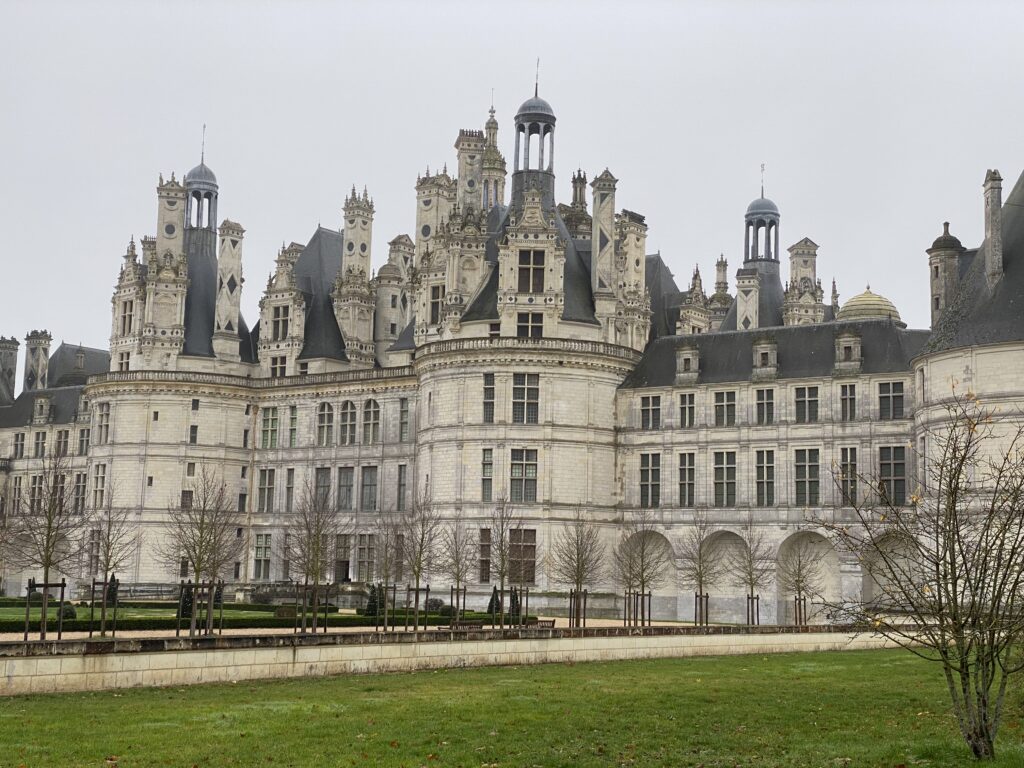
- Visit the castle allowing at least 3 hours and 30 minutes to 4 hours on site.
- See the famous double-helix staircase, inspired by Leonardo da Vinci.
- Climb onto the terraces to admire the roofs, towers, and famous chimneys of Chambord.
- Explore forest park, the largest walled park in Europe, with the option to rent bikes for a different way to extend your visit.
The advisory board
Chambord without an explanation is impressive. Chambord with a good guide is fascinating. You finally understand who Francis I was, the importance of the estate, the royal hunts, the influences attributed to Leonardo da Vinci, and all the architectural discoveries you wouldn't notice on your own. We used the HistoPad as a supplement, which offers 3D reconstructions and over 1.5 hours of audio commentary, but if you're hesitant, also add a real guided tour: it's often a small supplement that completely changes the experience.
Local producers on the way
Between Orléans and Chambord, we stopped at a small artisan producer of terrines and rillettes. These kinds of impromptu stops are among our best travel memories: a simple encounter, passionate explanations, and then a picnic far better than anything we would have found at a highway rest stop.
Where to sleep
We stayed in a bed and breakfast in a village about ten minutes from the château. In my opinion, it's the best option for enjoying the area peacefully while staying very close to Chambord.
Blois — Royal History in All Its Complexity
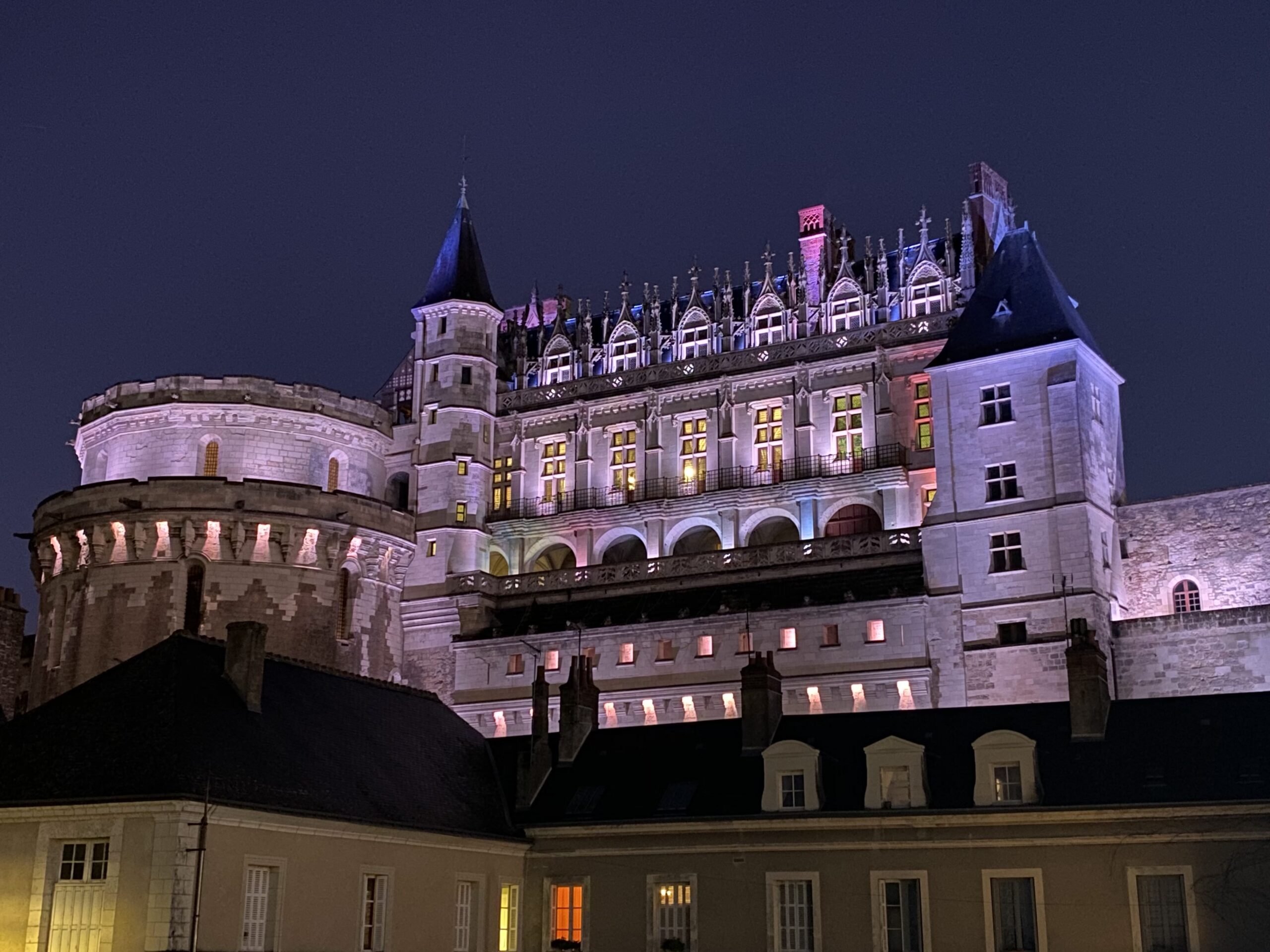
What to do
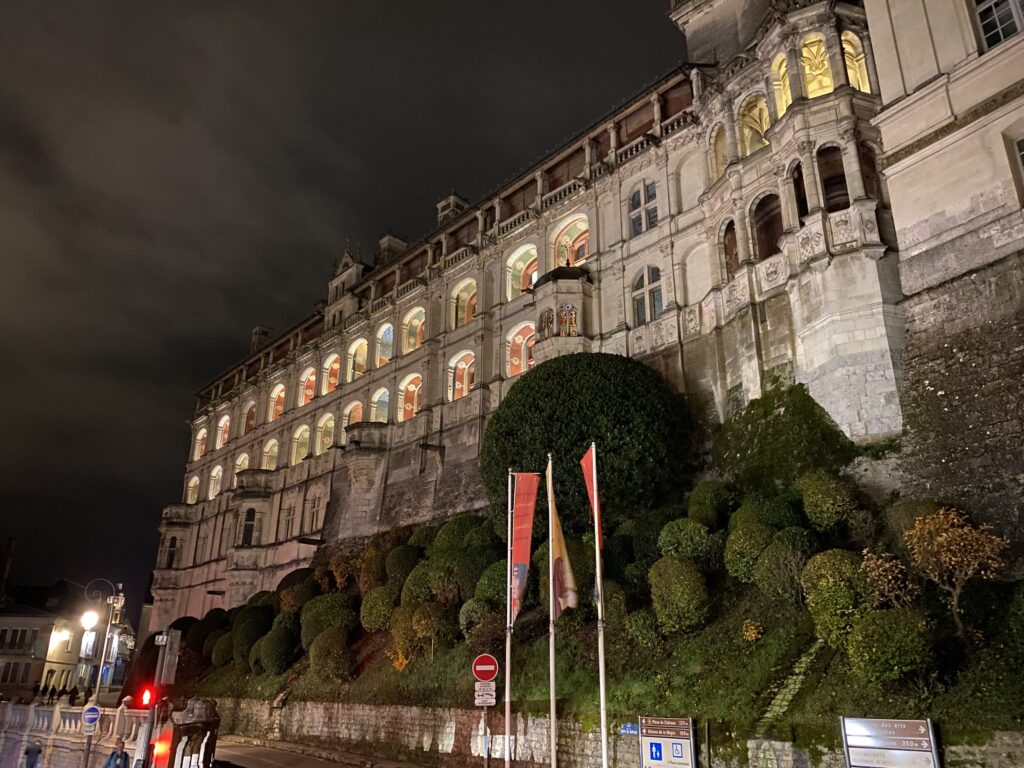
- Visit the Royal Château of Blois, fascinating for its four architectural styles combined in the same complex.
- Walk in the Old Blois, among cobbled alleyways and half-timbered houses.
- To make a detour by House of Magic, just opposite the castle, for a more playful break between two historical visits.
- Walk along the Loire quays and cross the Jacques-Gabriel bridge.
The advisory board
The Château de Blois is fascinating, but it can also be confusing without explanations. With its wings built at different times, you move from one style to another without always understanding what you're looking at. The guide we had, a former history teacher, completely transformed the visit. She told us about the assassination of the Duke of Guise by Henry III in this very room with the same attention to detail as a good detective novel. My mother was still talking about it two days later. It's exactly the kind of moment we hoped to experience while traveling with my parents.
Evening events and tastings
Blois is an excellent base for discovering the wines of Touraine and Cheverny. At the end of the day, we did a cellar tasting: five wines, a board of local charcuterie, and a lovely way to slow down after our visits. A simple tip if you're driving: plan for a designated driver. For our part, we took turns—one day my father, one day my sister.
Where to sleep
We chose a three-star hotel facing the quays. The room overlooked the Loire, and the sunset view left us with a very beautiful memory.
Amboise and Clos Lucé — The Absolute Must-See
What to do
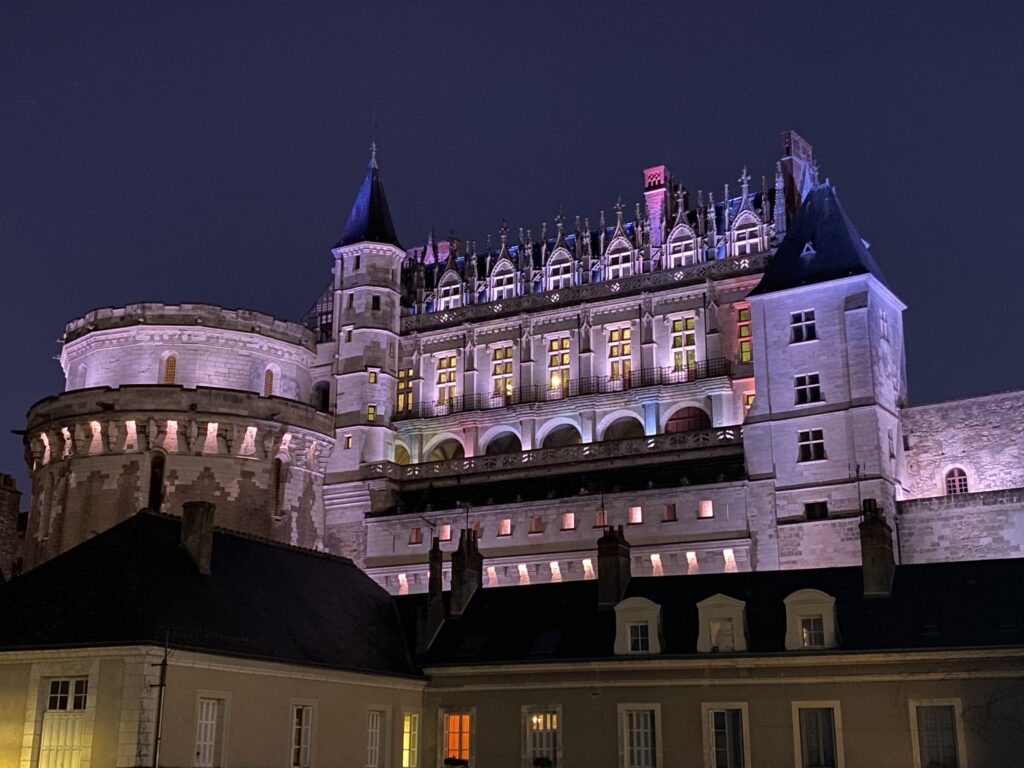
- Visit the Royal Château of Amboise, which overlooks the Loire and offers a magnificent view of the city.
- Discover the Clos Lucé, the final resting place of Leonardo da Vinci in France.
- Browse the Clos Lucé Park to see Leonardo da Vinci's machines in full scale and better understand his inventive genius.
- Stroll in the Old Town of Amboise, its market and its troglodytic surroundings.
The advisory board
For us, Le Clos Lucé is an absolute must-see in the Loire Valley. Leonardo da Vinci spent his last three years there, invited by Francis I, and the visit helps us better grasp how his mind worked in so many directions at once. You can see his bedroom, recreated spaces, models inspired by his drawings, and in the park, several life-sized machines that you can observe or interact with depending on the installation. My father, who loves contraptions, could have spent the entire day there. If you love history, ideas, and places that truly spark curiosity, plan for ample time.
Local producers on the way
The Amboise region is also a beautiful gateway to Vouvray wines, made from Chenin. We ventured to a small troglodyte cellar dug into the rock for a tasting of still and sparkling wines. Even if you don't drink much, the experience is worth it for the atmosphere of the place as much as for the tasting. The troglodyte cellars are indeed among the iconic experiences of the Vouvray and Touraine region.
Where to sleep
We chose a country cottage about fifteen minutes from Amboise. The farm breakfast, with homemade jams, fresh bread, and fresh eggs, added exactly the kind of simple, warm touch we love on this type of road trip.
Tours — Between Old Town, Vineyards, and Chinon Fortress
What to do
- To walk in the square Plumereau and in the Old Tours to enjoy the medieval atmosphere and the half-timbered houses.
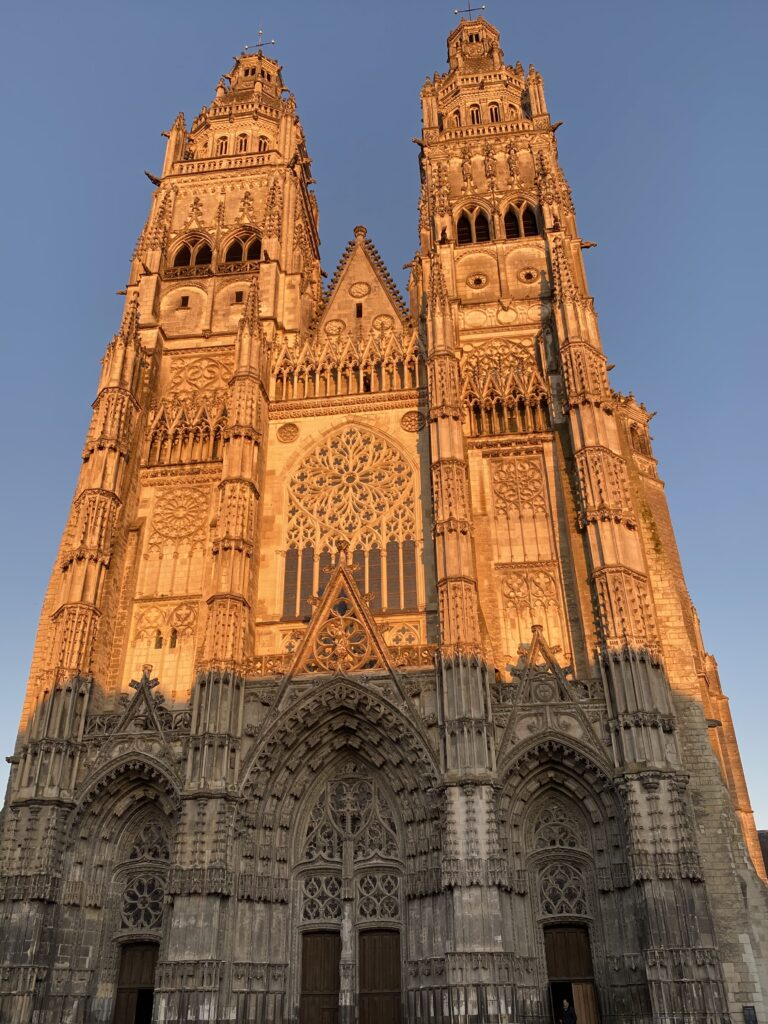
- Visit the Saint Gatien Cathedral, known for its ornate facade and stained-glass windows.
- Pass through Halles market, a must-visit gourmet stop in the city.
- Explore Vouvray vineyards or of Chinon according to your preferences.
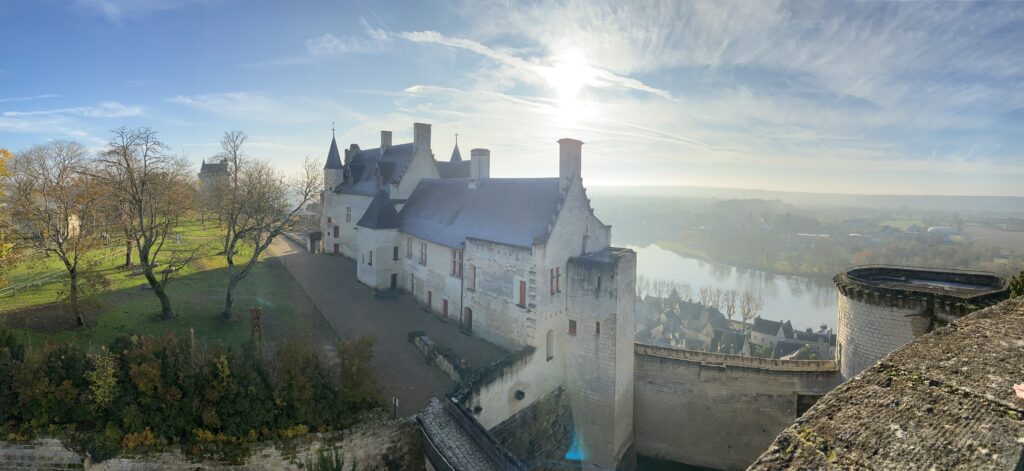
- Add a trip to the Royal Fortress of Chinon, a place steeped in history that overlooks the Vienne river and the surrounding vineyards.
The advisory board
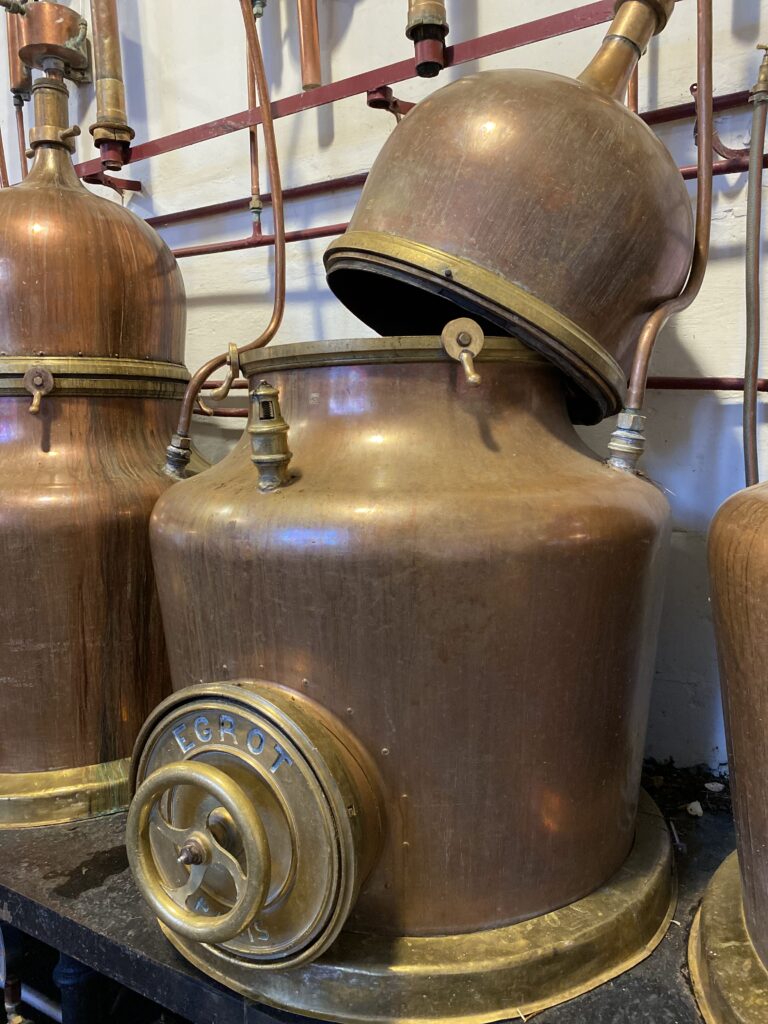
Tours is a very beautiful city, but one of our greatest memories in the area was a bit further away, near Saumur: the Combier distillery. Founded in 1834, it is one of the oldest distilleries in the Loire Valley, still in operation today.
We went out of curiosity and ended up staying much longer than expected. The history of absinthe, the misconceptions surrounding hallucinations, the distillation methods, and the tasting ritual make the visit truly memorable. If you enjoy artisanal experiences told by passionate people, it's a great stop to include on a road trip in the region. The distillery is well located in Saumur, not in Tours itself, so I advise you to present it as an excursion in the surroundings rather than an activity directly linked to the city.
Evening events and tastings
In the evening in Tours, we ate at a traditional Touraine bistro: rillons, rillettes, Sainte-Maure cheese, and a glass of red Chinon. A simple, local meal that was exactly in the spirit of our trip.
Local producers on the way
On the road between Amboise and Tours, we stopped at a duck producer recommended by our hosts. These kinds of places aren't always in the guidebooks, but they often provide the best picnic spots of the trip.
Where to sleep
We stayed in a hotel in downtown Tours. The location was ideal for going out in the evening and enjoying the neighborhood's atmosphere without having to take the car again.
Le Mans - the surprise of the trip
What to do
- Explore the Plantagenêt City, one of France's most beautiful historic centers, with its cobbled streets, half-timbered houses, and Renaissance mansions.
- Visit the Saint-Julien Cathedral, immense and impressive, often considered one of the region's great religious monuments.
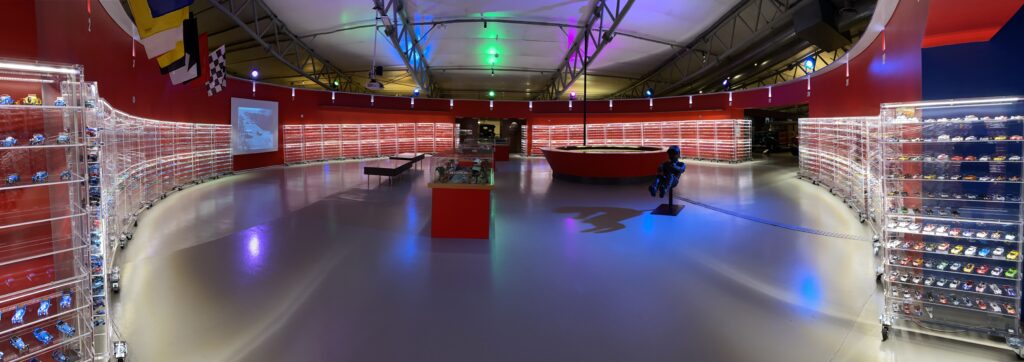
- Discover the 24 Hours of Le Mans Museum, even if you're not a car enthusiast.
- See the remains of the Gallo-Roman ramparts, still very visible today and among the most striking elements of the historic center.
The advisory board
Le Mans was the real surprise of the trip. We thought we'd just make a quick stop there on the way to Normandy, but we ended up staying for a full day. The 24 Hours of Le Mans Museum was a real favorite, even for those who aren't into car racing. The story is well told, the cars on display are legendary, and the whole experience makes the visit much more captivating than you might imagine. However, the museum is currently undergoing renovations: the official website indicates a temporary closure for construction with a temporary exhibition at the South Gate of the circuit, so it's best to check the visiting conditions before you go.
Evening events and tastings
Le Vieux Mans, once night falls, is particularly beautiful. The cobbled streets, illuminated facades, and small terraces give it an almost cinematic atmosphere. A crêperie-cider house is a great option for a simple, friendly supper that fits the spirit of the stop.
Where to sleep
Sleeping in the medieval city is a great idea if you want to enjoy the atmosphere until the evening. The options there are more limited than in the modern districts, so booking early remains a good reflex.
Caen - the D-Day Memorial
What to do
- Visit the Caen Memorial Museum, one of the great museums dedicated to World War II and 20th-century history.
- Discover the William the Conqueror's Castle as well as the two great abbeys in the city.
- Plan a trip to the Landing beaches, including Juno, Omaha, and the surrounding memorial sites.
- Make a stop at Atlantic Wall Museum In Ouistreham, set up in a former German firing post.
The advisory board
The Caen Memorial is a profoundly moving visit. To delve deeper, we had booked a guided excursion to the D-Day landing beaches with a local historian, and it's clearly what gave this stop its full significance. We went through Juno Beach, an essential memorial site for Canadians, then to the American cemetery overlooking Omaha Beach. The Juno Beach Centre specifically pays tribute to the Canadian soldiers who fell during World War II, and it's a particularly powerful stop when traveling as a Canadian family. My father cried more than once. Plan for at least a full day, ideally more if you want to experience the sites with the time they deserve.
Evening events and tastings
After a day like that, we needed something simple and comforting. A good Norman cider, roasted Camembert, and an apple tart: it's hard to find anything more local or more soothing after the intensity of the visits.
Local producers on the way
Between Le Mans and Caen, we stopped at a cheese shop to taste the great Norman classics: AOP camembert, Livarot, Pont-l'Évêque, and Neufchâtel. These kinds of stops are always worth it, especially when the person behind the counter truly knows the history of their products.
Where to sleep
We stayed at a hotel in downtown Caen. Another good option would be to stay near Courseulles-sur-Mer to be closer to Juno Beach and the sea, at the cost of a slightly longer drive for other visits. The Juno Beach Centre is indeed located in Courseulles-sur-Mer.
Rouen — Art, History, Jumièges
What to do
- Visit Notre-Dame Cathedral, immense and made famous by Monet.
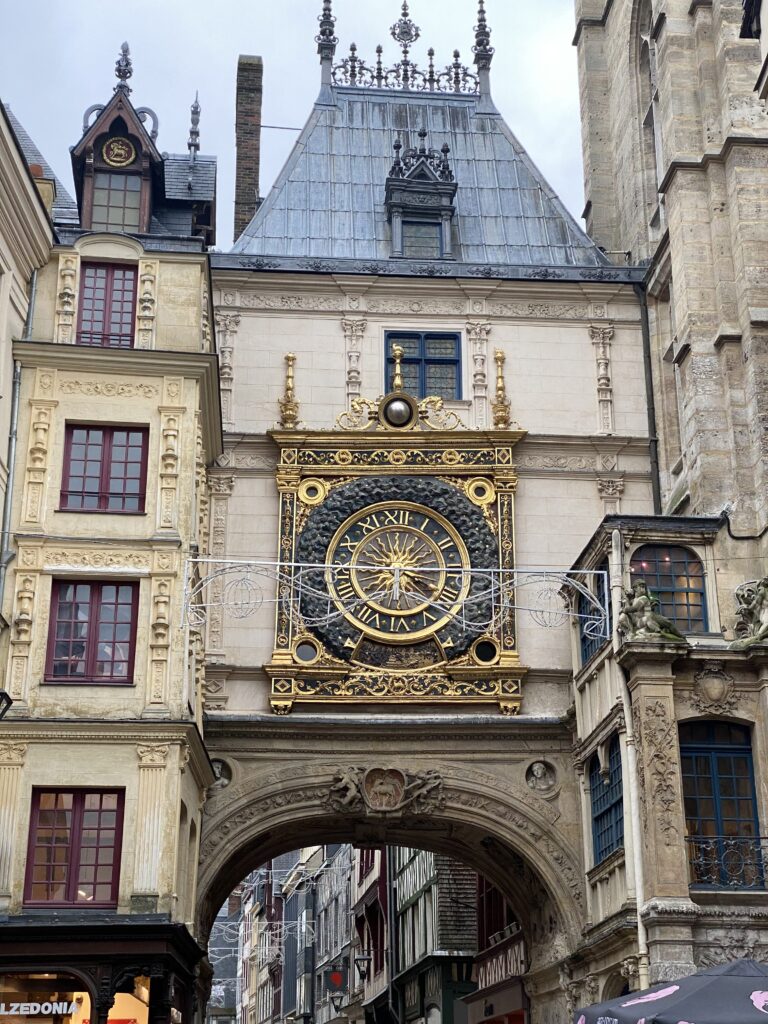
- The Gros-Horloge, emblem of the historic center.
- The square of Old Market, the place of Joan of Arc's martyrdom.
- L’History of Joan of Arc, an interactive and immersive museum located in the former archbishop's palace.
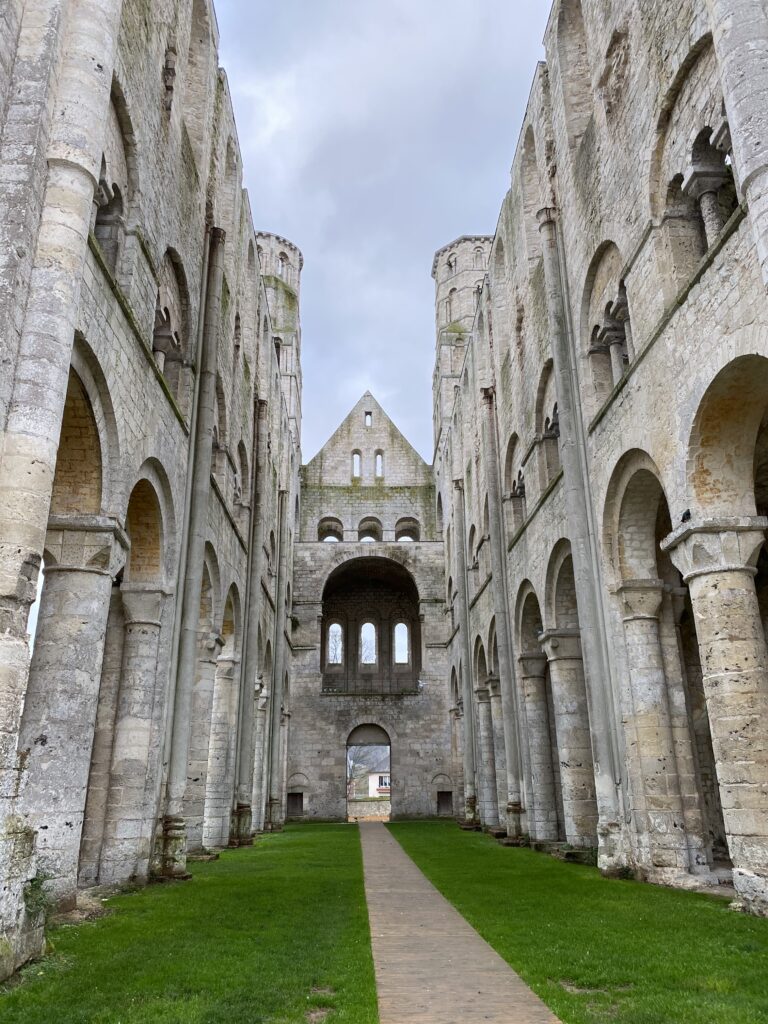
- L’Jumièges Abbey On the way, not to be missed.
The advisory board
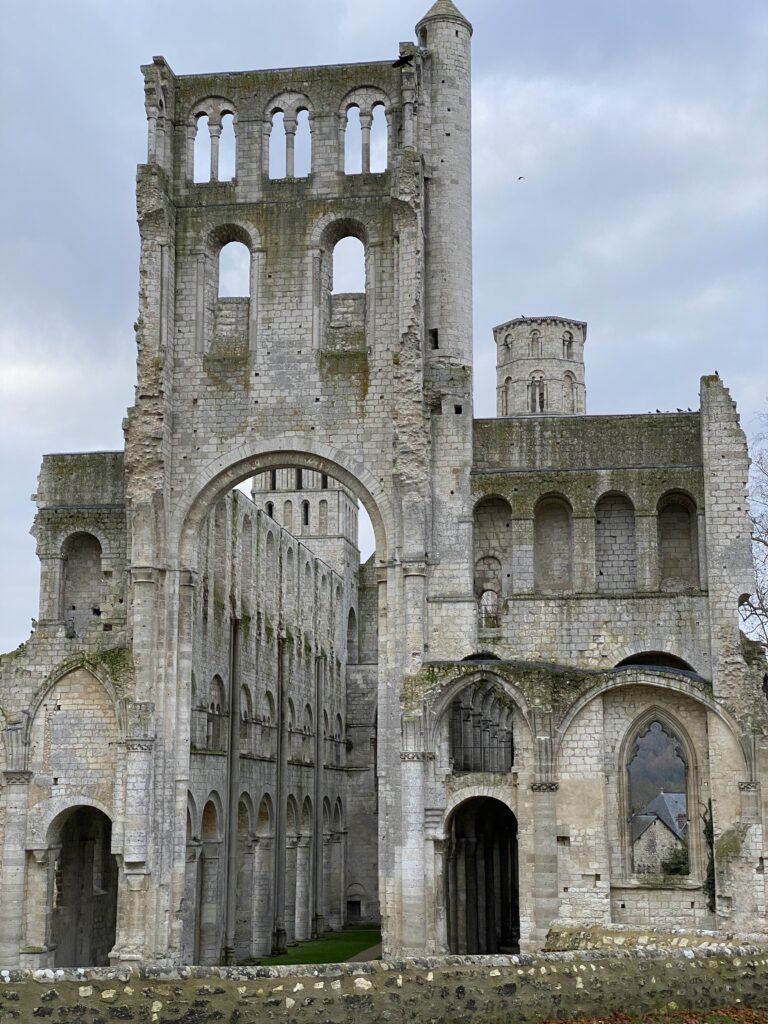
The Abbey of Jumièges left a profound impression on us. Even in ruins, the place remains magnificent. Founded around 654, it is one of the oldest great abbeys in Normandy, and its history spans the centuries, from Viking raids to post-revolutionary destruction.
The guided tour is really worth it, because it helps you understand what you're looking at. Without an explanation, you admire magnificent ruins. With a guide, you grasp a thousand years of history, the organization of the abbey, its successive reconstructions, and the symbolic power of the place. It's the kind of place that makes you want to slow down and simply look.
In our opinion, the Historial Jeanne d’Arc is one of the most successful attractions in Rouen. It’s not a classic museum: it’s an immersive, very well-designed experience that allows visitors to understand both the story of Joan of Arc and the construction of her legend through the centuries.
Evening events and tastings
For the last evening of the trip, we treated ourselves to a gastronomic meal in old Rouen. It was the perfect way to slow down, talk about all the highlights of the road trip, and realize how precious these ten days together had been.
Where to sleep
Sleeping in old Rouen is a great idea for enjoying the atmosphere on foot. On the other hand, if your flight leaves early from Charles-de-Gaulle, it's better to choose accommodation that remains practical for getting out of the city quickly in the morning.
The last morning — Rouen to CDG
On the morning of our return flight, we got up very early, around 6 AM. It takes about 2 hours to drive between Rouen and Charles-de-Gaulle airport in good conditions, but we had planned a good buffer for returning the car and checking in our luggage.
💡 Crucial advice: If you are sleeping in Rouen the night before your departure, choose a hotel with convenient access to the A13. It's better to avoid the historic center early in the morning: the streets there are narrower, exiting can be slow, and it's not the kind of stress you want to experience before a flight. The A13 passes south of Rouen and is the natural route towards the Paris region.
The day before, we had also spotted a convenient gas station on Google Maps before arriving at CDG. It's a small detail, but when you have to return a rental car at the airport, it can save a lot of stress, especially since some rental companies charge fuel and service fees if the tank isn't returned at the correct level.
💰 Our budget for 10 days for 4 people
Here is a realistic estimate for two people on a 10-day road trip through the Loire Valley and Normandy, for a comfortable but not luxurious style:
- Direct flights Montreal-Paris: 900–1,400$/person = 1,800–2,800$
- Car rental 10 days (automatic compact category) : 600–850$
- Essence + tolls (~932 miles): 350–450$
- Accommodations (average €125/night × 9): €1,700–€2,000$
- Meals (2 meals out/day + picnics): 1,300–1,700$
- Tours, guides, tastings: 600–800$
- Local producer purchases + wines to bring back: 400–700$
- Divers + margins: 300–500$
Estimated total: $7,000 to $10,000$ CAD for four people, including everything. One can absolutely reduce costs by choosing modest B&Bs and picnicking more often; or go higher with 4-5 star hotels and gourmet meals.
📋 Checklist before leaving
Documents
- Passport valid for at least 6 months after return
- Canadian driver's license (valid in France without formality for short-term tourists)
- Proof of travel insurance (medical + cancellation)
- Printed reservations + digital copies (hotels, car, flights)
- Bank card with no foreign exchange fees abroad (Wise, Tangerine, etc.)
- ETIAS as of late 2026, you will need to obtain it online before departure (see box at the top)
Clothing
- Layerable mid-season clothing (Normandy = changeable skies)
- Lightweight waterproof — essential even in summer
- Comfortable walking shoes - paved everywhere
- A slightly more chic outfit for fine dining restaurants
- Light scarf — cathedrals stay cool
Day bag
- Reusable water bottle
- Sunscreen + hat (sunny Loire in summer)
- Charged camera + spare battery
- Little notebook — for guide info you'll forget
- Foldable insulated bag for cheese/deli purchases
Health and practice
- Basic first-aid kit (painkiller, bandages, anti-diarrheal)
- Type C/F electrical adapter (220V)
- European SIM card or activated travel plan
- GPS or offline navigation app (Google Maps offline mode)
- A few bottles of water and snacks for the road.
In conclusion
Ten days on a road trip through the Loire Valley and Normandy with my parents: it's undoubtedly one of the most beautiful trips we've ever taken together. What most impressed us, in the end, wasn't just the list of castles visited, but all the encounters that gave soul to the journey: the guide in Orléans, the history teacher in Blois, the absinthe craftsman, the Norman cheese maker, the historian guide on the D-Day beaches.
If you were to give three pieces of advice to those who wanted to do a similar trip again, they would be these: get guides as soon as you have the opportunity, stop at small producers, and don't try to do too much. On this type of itinerary, eight well-savored stops are better than fifteen rushed ones. This idea of slowing down and prioritizing local encounters also fits very well with the spirit of itineraries in the Loire Valley and Normandy promoted in several travel guides.
And then, there's something very precious about traveling with your parents when everyone is an adult. The conversations at dinner, the silences in front of a memorial site, the laughter in a cellar or on the road – these are simple, yet deeply lasting memories. It's the kind of trip you don't forget.