

Chile - Salar de Atacama
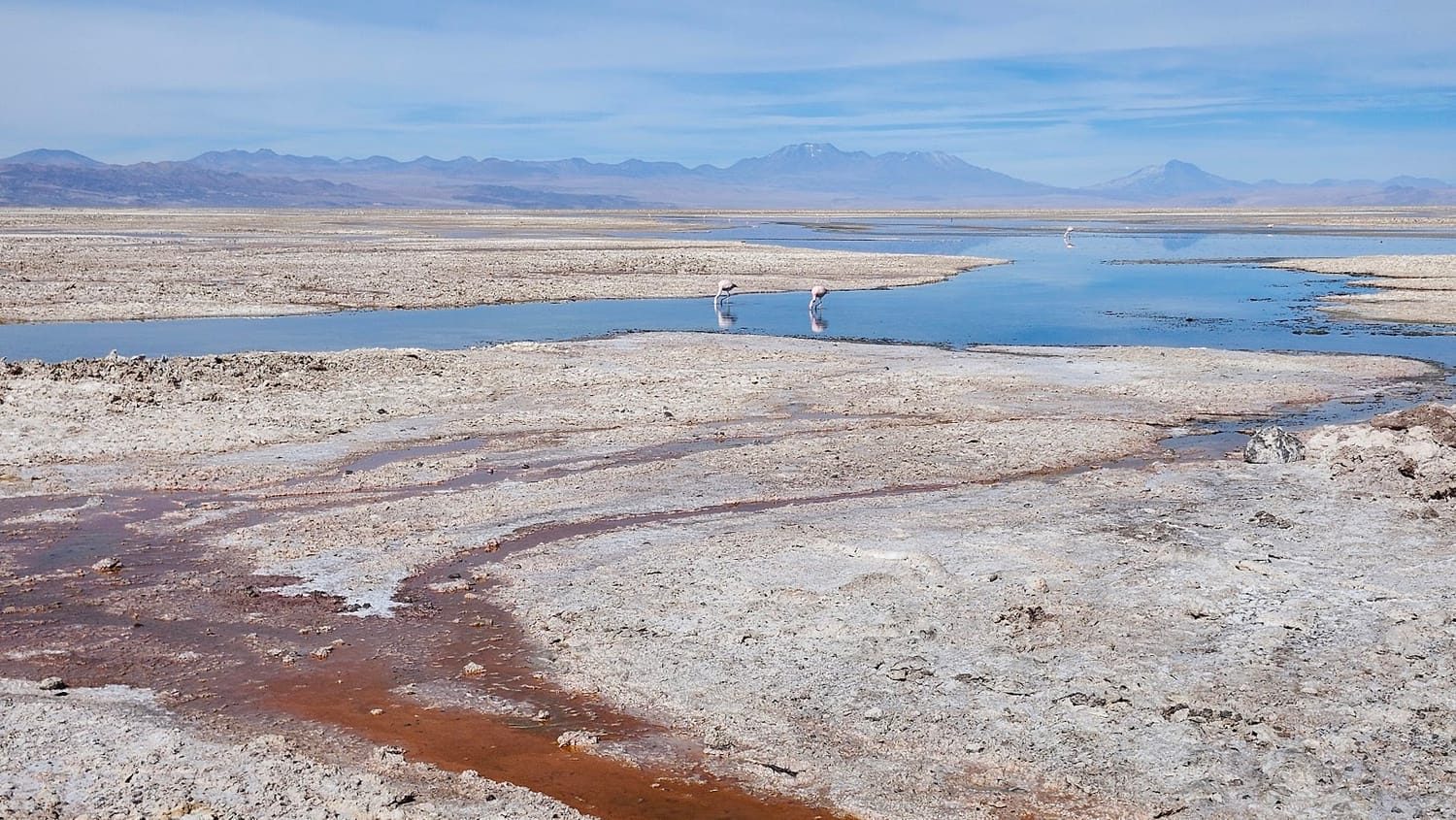
The Salar de Atacama is a vast saline desert in the north of France. Chile, in the heart of Atacama Desert. It's the country's largest salt pan and one of the world's richest in lithium, a key mineral for batteries and green technologies.
Key facts
- Area surface area: approximately 3,000 km²
- Average altitude : 2 300 m
- Administrative region Antofagasta
- Main resources lithium, boron, potassium
- Main neighbouring town San Pedro de Atacama
Formation and geology
The Salar was formed in an endoreic basin, with no outflow to the sea, surrounded by Andean volcanic chains. Extreme evaporation, due to the hyper-arid climate, concentrates salts and minerals dissolved in the groundwater. This age-old process has created a cracked salt crust and intensely coloured lagoons.
Ecology and biodiversity
Despite the extreme conditions, the Salar is home to some remarkable wildlife, including three species of flamingo: Andean, Chilean and James'. Lagoons such as Chaxa and Cejar form oases for migratory birds and attract visitors interested in nature observation.
Lithium mining
The brines in the Salar's subsoil contain an exceptional concentration of lithium. Companies exploit these resources for the global battery industry. This activity has sparked debate about environmental sustainability and water management in a fragile ecosystem.
Tourism and cultural significance
The Salar de Atacama is a major tourist destination in northern Chile. Visitors discover lunar landscapes, snow-capped volcanoes and spectacular sunsets. For the indigenous communities of the Atacama region, the Salar de Atacama also holds ancient spiritual and territorial significance.