

Laguna de Caquena
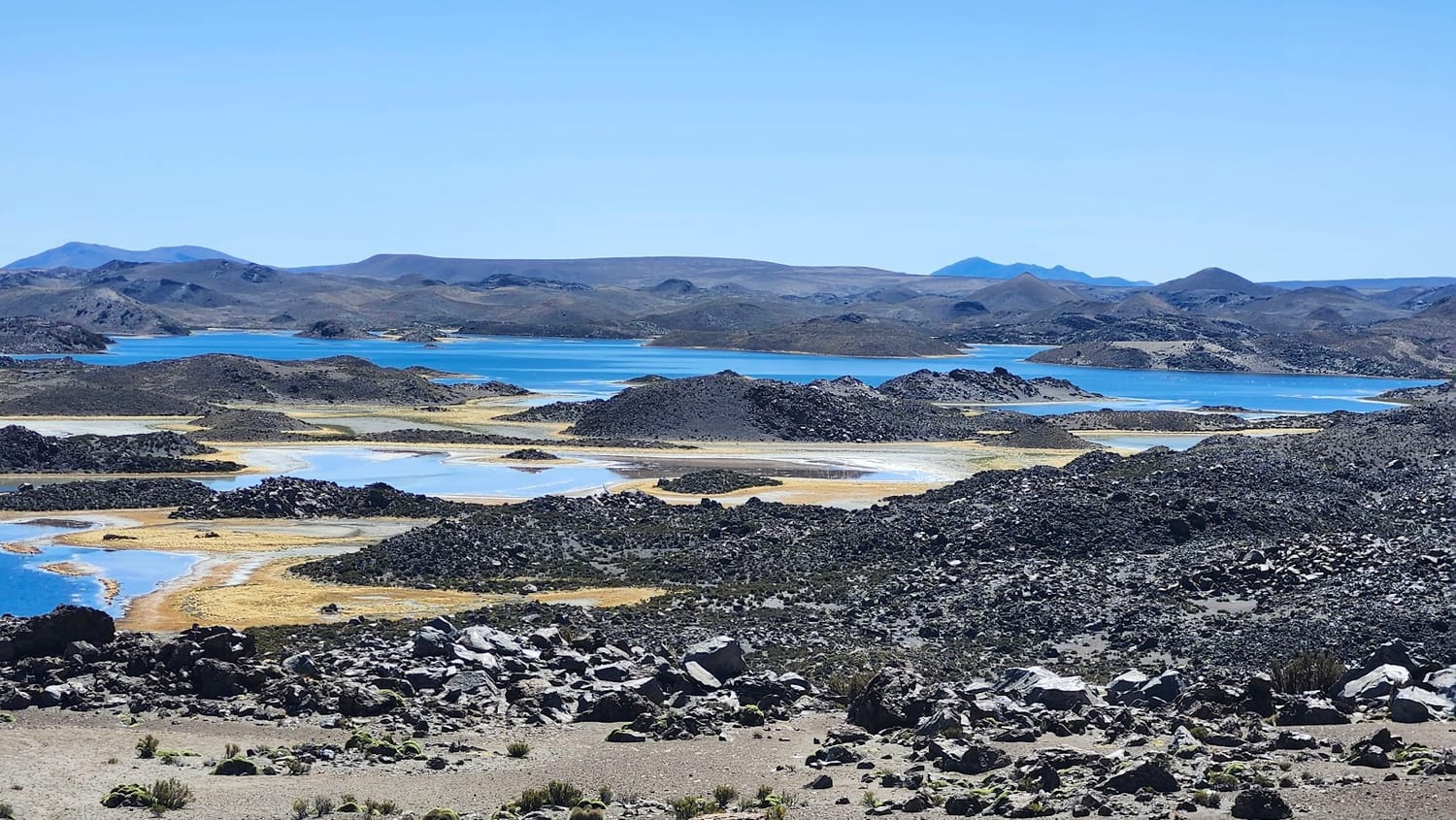
Visit Laguna de Caquena is a small high-altitude salt lake located in northern Chile, in the immediate vicinity of the border with Bolivia, in the region of’Arica and Parinacota. Nestled in the Andean Altiplano, it is part of a fragile high-mountain wetland ecosystem essential for local wildlife, particularly Andean flamingos.
Key facts
- Country Chili
- Region Arica y Parinacota
- Altitude Approximately 4,400 meters
- Type Andean salt lagoon
- Proximity Bolivian border, near the village of Caquena
Geographical context
Located north of the Lauca National Park, the lagoon is located in a highlands area dominated by active volcanoes such as Parinacota and the Pomerape. The climate is cold and dry, with significant temperature variations between day and night. The lagoon is fed by meltwater and underground springs originating from the Andes Mountains.
Environment and biodiversity
The Caquena Lagoon is home to populations of Andean flamingos and vicuñas, as well as migratory bird species adapted to saline environments. It is part of the Salar de Surire and the Andean wetlands network recognized for their ecological importance. Local Aymara communities use these lands for traditional camelid grazing.
Ecological Importance and Conservation
The lagoon contributes to the hydrological regulation of the Altiplano and serves as a refuge for Andean fauna. Although relatively isolated, it is vulnerable to the effects of climate change and increasing human pressure (tourism, mining). Regional conservation initiatives aim to preserve these high-altitude ecosystems, which are essential for the biodiversity of northern Chile.